
























There’s a question nobody at Telkom or even most Telecom providers may want to answer out loud: what’s the point of fibre to every house if nobody in that house knows what to do with it? I’ve sat in enough digital transformation rollouts to know this pattern by heart. You spend months, sometimes years, getting the network right: cabling, uptime, redundancy, the whole infrastructure stack and then you hand it over to end users who look at the shiny new system like it landed from Mars. Connectivity was never the hard part. Getting people to actually use it productively was always the real project. It’s even worse when it’s new software. That’s exactly the gap Telkom just put R100 million behind.
Telkom, Africa’s largest integrated communications company, providing integrated communications solutions to an entire range of customers, has pledged a USD 6.1 million / R100 million commitment to establish the Telkom AI Institute, a new platform designed to equip South Africans with artificial intelligence and digital skills, foster local innovation, and accelerate inclusive participation in the digital economy. The pledge was announced in Geneva as part of the International Telecommunication Union’s Partner2Connect Digital Coalition, which, at the WSIS Forum 2026, confirmed it has surpassed $82 billion in global commitments to connect the world. Telkom is one of only a handful of South African and African companies recognised in this round.
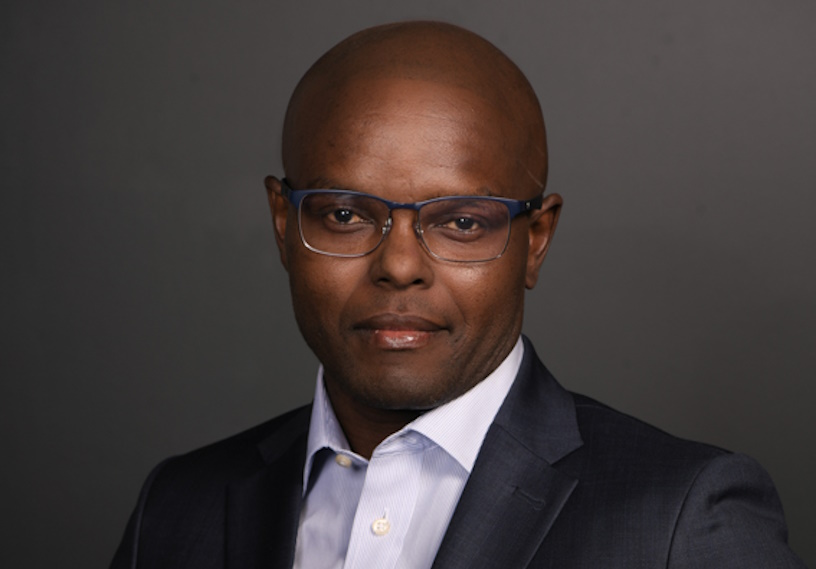
Group CEO Serame Taukobong put the thesis plainly: “connectivity without capability only gets South Africa halfway there”. Telkom’s own framing is that, after years spent building networks, the company is now positioning itself to ensure that connectivity translates into skills, jobs, and opportunity, targeting the South Africans who’ve had the least access until now.
The Institute will focus on practical, job-ready AI and digital skills training, with an emphasis on young people, small businesses, and communities currently underserved by South Africa’s digital economy. It sits inside Telkom’s broader Vision 2030 ambition, a deliberate shift from “we lay the cables” to “we build the capability,” repositioning Telkom as more of a digital economy orchestrator than a pure infrastructure provider.
But this matters beyond a press release because Telkom is naming something most of the industry has been dancing around: South Africa’s digital divide isn’t a coverage problem anymore. It’s a capability problem. You can roll out fibre and 5G into every township and rural node in the country, and if the people on the other end of that connection don’t know how to turn it into income, a job, or a business, you’ve just built very expensive plumbing.
That’s the real story across the continent, not just South Africa. Kenya, Nigeria, Ghana, Rwanda every market chasing AI policy right now is discovering the same bottleneck. Infrastructure investment has outpaced skills investment for years. Telkom putting real money behind closing that specific gap, rather than another roundtable or white paper, is worth paying attention to.
R100 million sounds like a big number until you put it next to the problem it’s meant to solve. South Africa has millions of young people who need job-ready digital skills, not thousands. Spread across “practical AI and digital skills training” for youth, small businesses, and underserved communities nationwide, that budget gets thin fast, and skills institutes have a well-worn history of strong launch events followed by quiet, underfunded years three and four.
There’s also the framing to watch. This is a $6.1 million pledge inside an $82 billion global coalition tally useful for Telkom’s ESG and Vision 2030 optics, useful for the ITU’s headline number, genuinely useful for the people it trains if execution holds up. Those two things can both be true. The announcement tells us the ambition. It says nothing yet about curriculum, delivery partners, cohort sizes, or how “job-ready” gets measured a year from now.
Telkom is right that connectivity without capability is a dead end; that part of the thesis is correct and overdue. But R100 million is a pilot budget wearing a national-strategy costume, and unless Telkom publishes real numbers on graduates, job placements, and reach within 12 months, this becomes another connectivity-adjacent press release that African tech media forgets by next quarter.