




















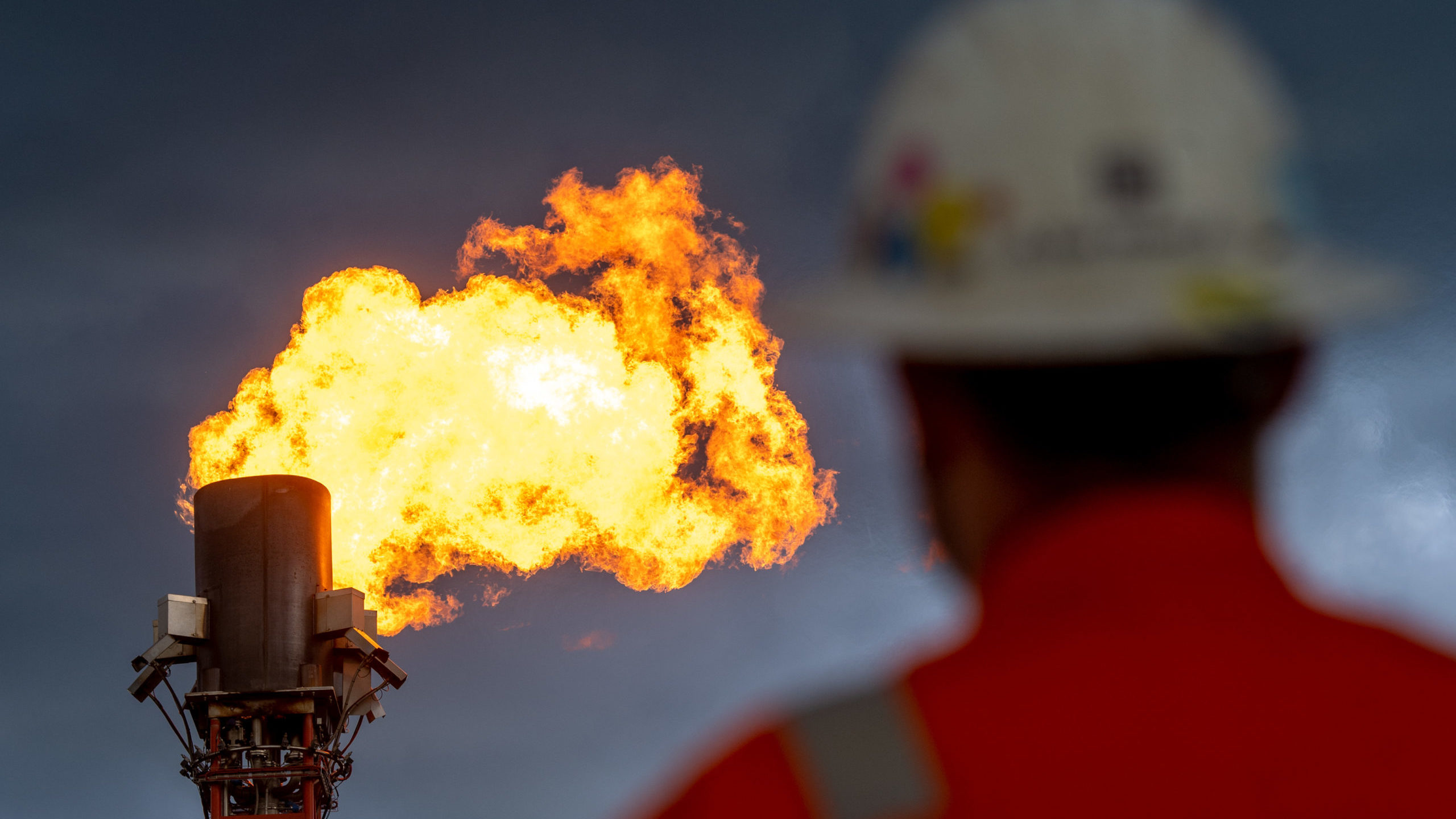
Every night across the Niger Delta, the sky glows orange not from city lights, but from gas being set on fire at oil fields because nobody bothered to build a pipe to catch it. The World Bank’s 2026 Global Gas Flaring Tracker just confirmed what people living under those flames already know: in 2025, the world burned $54 billion worth of natural gas into thin air, for the third consecutive year running. The volume torched was nearly equal to Africa’s entire annual gas consumption. On a continent where 565 million people have no electricity, that is not just an environmental crime; it is an economic catastrophe authored by the same governments that keep asking the world for energy investment.
Let me describe a scenario that would get any operations manager in the oil and gas sector fired on the spot. Well, I pray it doesn’t get to that level, of course. You have a raw material arriving at your facility every single day. You have no storage for it. You have no pipeline to move it. You have no buyer lined up. So you set it on fire. Every day. For thirty years. Meanwhile, your customers sitting right next door are begging for exactly that product. They will pay for it. They need it desperately. But you keep burning it anyway. That is gas flaring in Africa. And it just got worse.
These numbers should embarrass a Continent. The World Bank’s annual Global Gas Flaring Tracker, released on June 23, found that global gas flaring rose for the third consecutive year in 2025, surging to 167 billion cubic meters, the highest recorded level since 2019, wasting an estimated $54 billion worth of gas according to the U.S. Energy Information Administration. Let that breathe. Fifty-four billion dollars. burned. In one year. Again.
That volume of flared gas nearly equals Africa’s entire annual gas consumption and exceeds the volume of LNG that transited the Persian Gulf in the same period. In other words, the world burned enough gas to power an entire continent, the same continent that happens to be producing most of it and has the least electricity to show for it. Sub-Saharan Africa still had 565 million people without access to electricity in 2023, representing 85% of the global electricity access deficit. Eighty-five per cent of the world’s electricity problem lives in Africa. And Africa is sitting on gas fields that are being lit up like birthday candles.
If this were a competition, Nigeria would be a perennial podium finisher and not in a good way. Russia, Iran, Iraq, Venezuela, Mexico, Libya, Algeria, Nigeria, and the United States account for 80% of global gas flaring despite representing less than half of the world’s oil production. Three of those nine countries are African. Nigeria is the only Sub-Saharan entry on that hall of shame if they care at all.
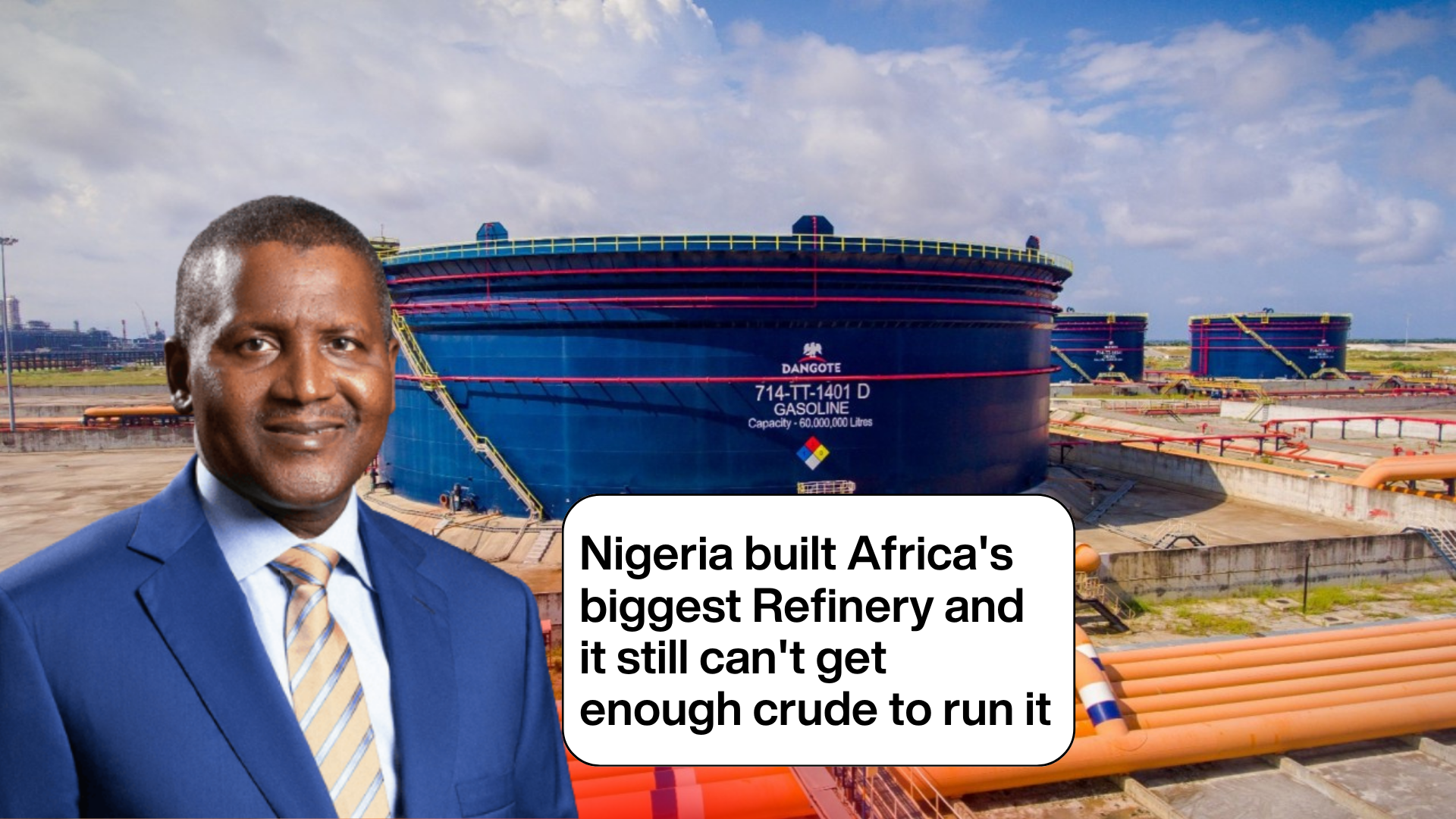
Nigeria flared 203.9 billion standard cubic feet of natural gas in 2025, up from 192.9 billion scf in 2024, pumping six million tonnes of CO2 annually from select sites alone, while pollutants harm farmers’ health and cut agricultural labour productivity by 5%. Funny enough, here is the part that will make your IT infrastructure brain short-circuit: the flared gas in Nigeria alone holds the potential to generate roughly 3,400 megawatts of electricity, nearly equivalent to Nigeria’s entire current grid capacity, which already leaves 85 million citizens without reliable power.
So Nigeria is burning, in open air, enough energy to double its national grid. Every year. While running load-shedding schedules that would make a 1980s Soviet planner wince. Despite Nigeria making it illegal to flare gas without ministerial approval since 1984, oil and gas companies incurred $646.3 million in penalties for gas flaring in 2025, and most companies simply pay the fine rather than invest in capture infrastructure, because the fines are cheaper than fixing the problem. You read that right. The penalty for burning billions of dollars of gas is a fine that costs less than the infrastructure to stop doing it. That is not a regulation. That is a subscription service for bad behaviour.
The Technology Exists. The Excuses Don’t. This is where I lose patience with the narrative that gas flaring is a complex, unsolvable problem. The technologies, policies, regulations, and financing mechanisms needed to capture and utilise associated gas are available. What is missing, in too many places, is the leadership, prioritisation, and governance needed to put these solutions into practice.
The United States achieved the largest absolute reduction in flaring of any country globally in 2025, cutting volumes by 7% driven in significant part by the commissioning of the Matterhorn Express pipeline in the Permian Basin. Kazakhstan has reduced its flaring by 87% since 2012 through sustained regulatory pressure, government commitment, and targeted infrastructure investment. Eighty-seven per cent reduction. Kazakhstan did it. If a landlocked Central Asian country figured out how to stop burning gas into the atmosphere, I refuse to accept that Nigeria, with a coastline, existing LNG infrastructure, and one of the largest gas reserves on the planet, cannot.
The World Bank estimates that between $70 billion and $100 billion in investment would be needed to eliminate routine flaring worldwide, with the main obstacles being public policy, infrastructure, and financing, not technology. For a continent attracting $41 billion annually in upstream oil and gas capital spending, the gap between what is invested and what is needed to stop this waste is not insurmountable. It is a choice.
Now you may be wondering what captured Gas could actually do? To put it in terms any network engineer appreciates: gas flaring is packet loss at the infrastructure layer. The signal is there. The data exists. It is just being dropped before it reaches the endpoint.
If captured and used to generate power, the 167 billion cubic meters of gas flared globally could provide approximately four billion kilowatt-hours of electricity, enough to make a material difference in underserved communities around the world.
The World Bank’s Zero Routine Flaring by 2030 initiative now includes Nigeria, Angola, Gabon, Cameroon, and the Republic of Congo. The commitments are signed. The 2030 deadline is four years away. The distance between the signatures and the flare stacks is currently measured in billions of cubic meters per year.
My point is, Africa does not have an energy problem. Africa has a governance problem that manifests as an energy problem.
The gas is there. The technology to capture it exists. The electricity demand is desperate and documented. The investment frameworks are in place. What is missing is the same thing that has always been missing: the political will to treat citizens as customers rather than footnotes.
Every flare stack burning in the Niger Delta tonight is not a technical failure. It is a policy decision. And somewhere nearby, a family is running a generator on imported fuel, paying three times the market rate for electricity, in the shadow of a flame that could power their entire neighbourhood for free. That is Africa’s energy paradox in one image. And a $54 billion annual reminder that the continent keeps choosing it.