
























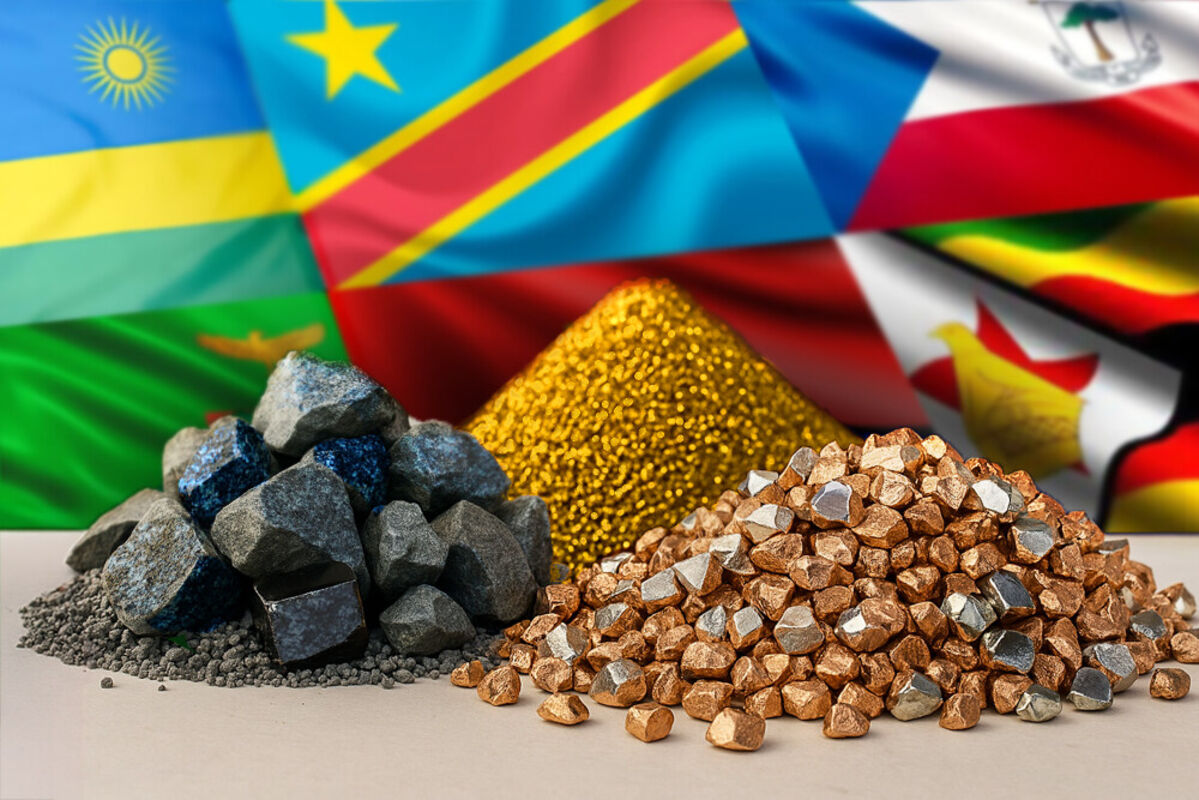
There's a question that should keep African policymakers up at night: how does a continent sitting on more than half the world's cobalt and nearly all its coltan not have a single company that can build can a competitive smartphone from scratch? I'm not talking about assembly. I'm talking about actually building chips, boards, the whole thing. Stick with me, because the answer isn't what most people assume, and there's a twist in this story that most articles about "Africa's missed opportunity" conveniently leave out. The minerals really are there, for example...
Let’s Start with the Democratic Republic of Congo. It produces roughly 70% of the world’s cobalt, the mineral that gives lithium-ion batteries in your phone and laptop their charge density. Next door, Zambia and the DRC sit together on the Central African Copperbelt, and copper prices surged to between $13,000 and $14,500 a tonne in early 2026, with copper being the metal that every circuit board and charging cable depends on. Tantalum, essential for the tiny capacitors in your phone, comes overwhelmingly from Central Africa too.
By any raw-materials logic, Kinshasa or Lusaka should be sitting where Shenzhen sits. They’re not. And here’s the part that should actually frustrate you: the world already knows where that value disappears to. Refining and value addition to cobalt happen elsewhere, in Belgium, China, Finland, and Norway, while the DRC exports the ore. A recent World Economic Forum analysis put a number on it: refining minerals domestically instead of shipping them raw adds a 15–30% value premium at each processing stage value currently leaving the continent entirely, and could potentially lift Africa’s GDP by roughly 12% if pursued at scale.
So if the case for local processing is this obvious, why hasn’t it happened? In 2019, Rwanda tried to answer that question directly. Mara Group opened a $50 million factory in Kigali that didn’t just assemble phones; it manufactured the motherboards and sub-boards on-site, something Reuters confirmed no other African assembly operation was doing. President Kagame stood in the factory and called it the birth of Africa’s high-tech era. It was a genuinely big deal for a moment; it looked like the continent had cracked the code.
Then reality showed up. The Mara Phones story doesn’t end where the headlines did. Within three years, the sister factory in South Africa had shut its doors amid unpaid wages and disputes with employees, and the flagship Rwandan plant, the one meant to prove Africa could compete, was running at just 10% of its production capacity, its managing director conceding smartphone penetration in Rwanda itself still sat around 20%. Even years after the celebrated launch, Nigerian customers, Africa’s largest phone market, couldn’t reliably find a Mara phone anywhere except by ordering online, and defaulted instead to a cheap Infinix from Transsion, the Chinese-owned company that quietly dominates African phone sales without ever selling a single unit in China.
That’s the twist. Africa didn’t fail to try. It tried, built something real, and got out-competed by the very supply chain it was trying to escape. The uncomfortable truth is that owning raw materials gets you maybe 5% of the way to owning a smartphone industry. The chip inside that phone, the actual processor, requires a fabrication plant, and a single modern fab costs upward of $20 billion, with $4-6 billion for the building alone, before you’ve bought a single piece of the 500-plus types of equipment a fab needs, some individual machines running over $150 million each. No African government or private consortium is writing that check anytime soon, and honestly, neither should they, not for cutting-edge chips nobody on the continent currently needs at that scale.
That’s the honest scepticism worth sitting with: the dream of an African iPhone rival is, for now, a distraction from the fight that’s actually winnable.
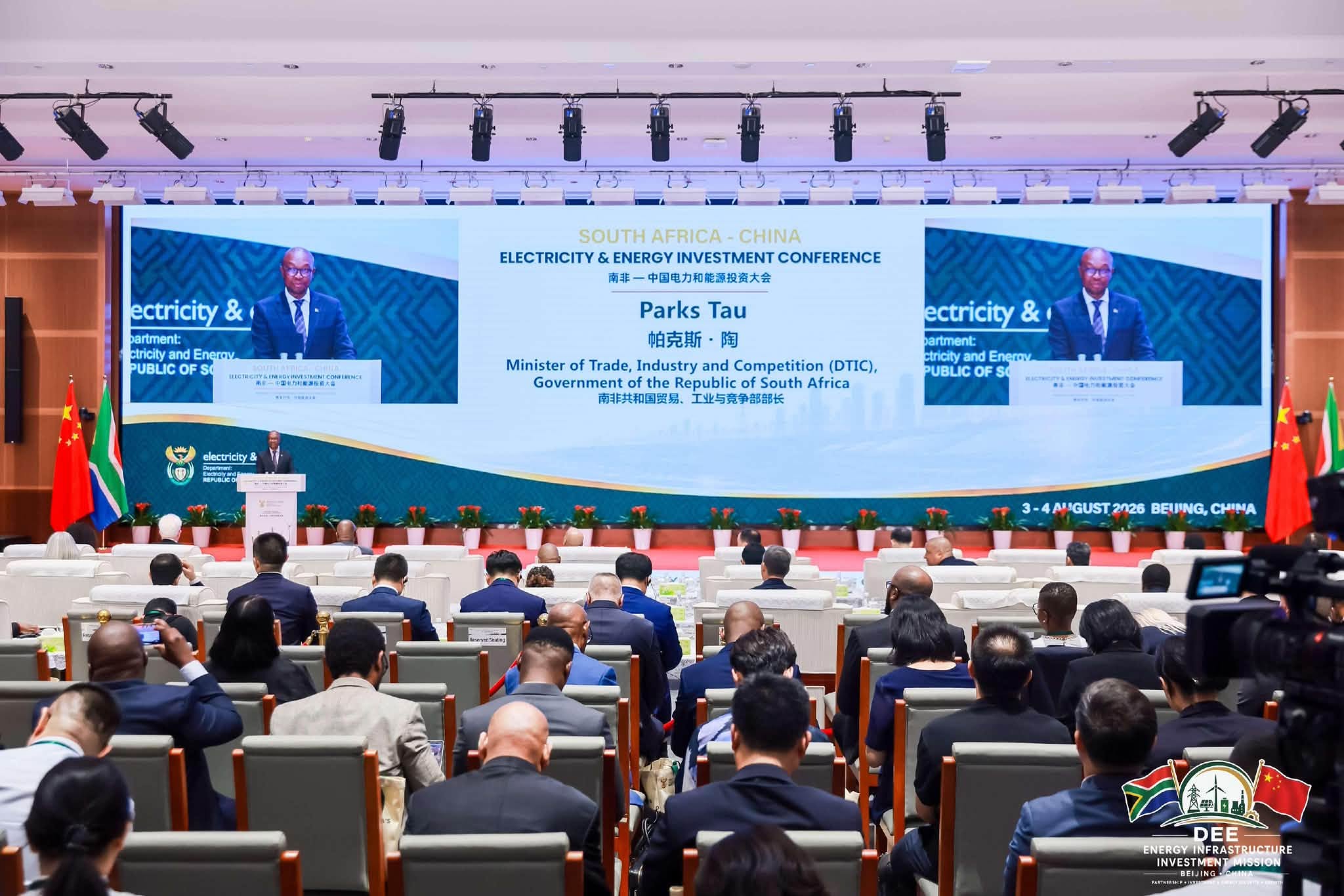
The winnable fight, that fight is beneficiation refining what Africa already digs up before it leaves the continent. And this is genuinely moving. The DRC and Zambia have set up a joint Special Economic Zone project, backed by Afreximbank, aimed squarely at producing battery precursors, batteries, and eventually electric vehicles instead of raw ore. A BloombergNEF study cited by the World Economic Forum found something remarkable: building a precursor plant in the DRC would cost three times less than building the same facility in the United States, meaning the economics genuinely favour Africa, if the surrounding infrastructure exists.
That “if” carries real weight. Analysts studying the same project flag energy access, land-locked logistics connecting Zambia and the DRC to ports, and, less discussed but arguably decisive is how much equity African states actually retain in these mining assets, since foreign-dominated ownership tends to favour fast raw extraction over patient domestic processing.
For me, Africa is not going to out-manufacture Shenzhen on finished phones anytime this decade, and chasing that headline is vanity, not strategy. But the battery precursor and refining play, cobalt sulfate, copper cathodes, processed graphite, is a fight Africa can actually win within five years, because the raw economics are already tilted in its favour. The continent doesn’t need a smartphone factory story. It needs to stop giving away the 15–30% margin sitting in unrefined ore at every single port. Whichever government moves first and keeps real equity in the mines will own the next decade’s version of an oil boom and everyone else will be reading about it after the fact