


















What happens to a self-driving car when it loses signal in the middle of a ride? Tesla just answered that question by putting a satellite dish on the roof.
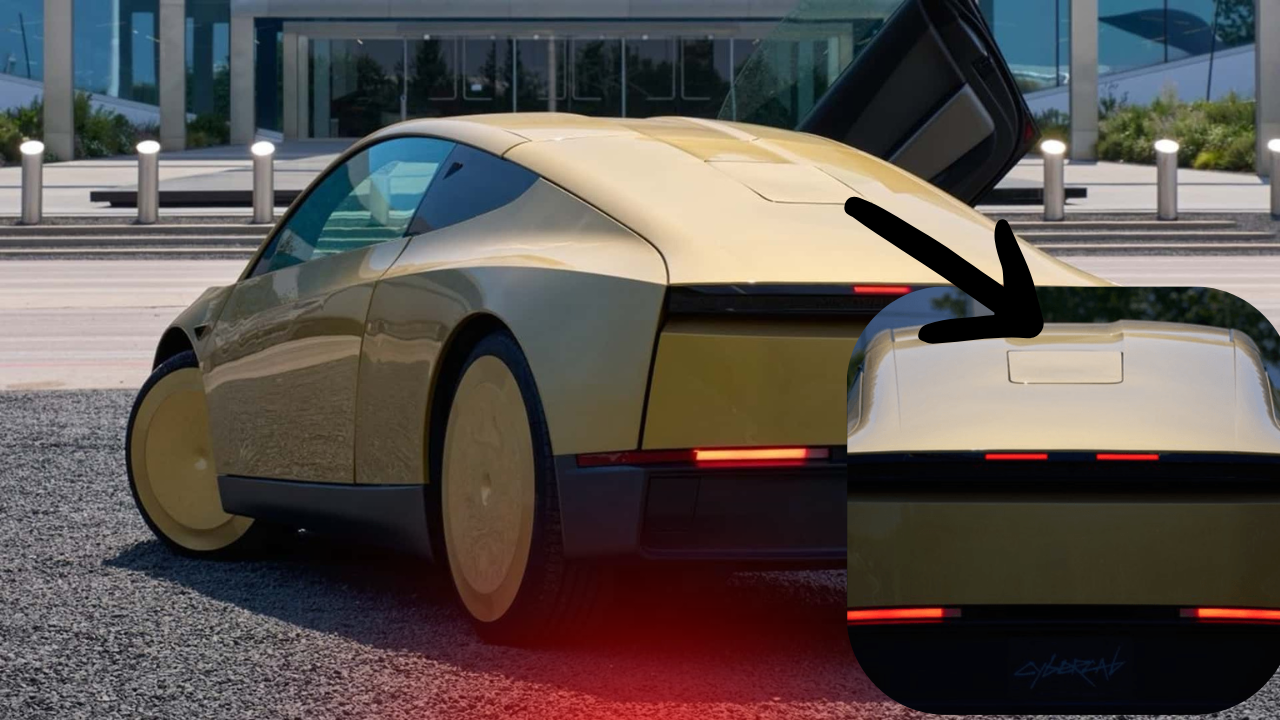
Tesla’s official Robotaxi account posted the first photos of a production Cybercab carrying built-in Starlink hardware, captioned “First Cybercab with Starlink integration.” Starlink hardware moulded into the Cybercab’s roof shows how satellite links can back up 5G and LTE for driverless fleet and passenger connectivity. The panel itself is subtle, a low-profile, roughly square unit sitting flush with the sheet metal rather than a raised “pizza box” dish, matching diagrams Tesla shared back in July, according to Motor1
For context on scale: the Cybercab is Tesla’s dedicated two-seat robotaxi with no steering wheel or pedals, first unveiled in October 2024 and now in production at Giga Texas. By late July, nearly 250 units had been spotted in factory lots as Tesla builds up fleets for services across Austin, Houston, Dallas, Miami, Tampa, and Orlando.
Tesla’s framing of the Starlink integration is straightforward: navigation support, customer service, and fleet management, giving the vehicle a data lifeline when it drops into a cellular dead zone, keeping maps current and letting support staff reach passengers if something goes wrong. But the more important use case isn’t passenger-facing at all. Continuous fleet telemetry matters more than in-car streaming. Dispatch systems need to know a Cybercab’s location, state of charge, and service status at all times, and Starlink gives Tesla a second network path when 5G and LTE drop out.
Why is this bigger than a Tesla product update? Strip away the robotaxi branding and what you’re looking at is a straightforward network redundancy design decision, the kind any infrastructure engineer recognises immediately. A single point of failure in your connectivity stack is a liability, full stop, whether you’re running a fleet of autonomous vehicles or a remote monitoring network. Tesla is treating cellular coverage the way any serious ops team should: as a layer that can and will fail, not a guarantee.
That’s a design philosophy worth paying attention to, because the same logic applies directly to Africa’s infrastructure gaps. Cellular dead zones aren’t a rare edge case across large parts of the continent; they’re the default outside urban corridors. Any autonomous system, remote monitoring network, or IoT deployment operating in rural or semi-rural African terrain runs into this exact problem: what happens when the 4G signal disappears halfway through a route or a sensor cycle?
Starlink itself is already answering that question in a lot of African markets. It’s live or launching in Nigeria, Kenya, Rwanda, Zambia, Mozambique, and a growing list of others, specifically because terrestrial cellular infrastructure hasn’t reached, and in some geographies may never economically reach, certain regions. What Tesla is doing at the vehicle level with the Cybercab is the same architectural pattern African infrastructure builders have been reaching for at the systems level: satellite as the fallback layer when ground-based connectivity can’t be guaranteed.
Tesla’s messaging leans hard into the passenger-experience angle, navigation, customer service, but that’s the smaller story here, and arguably a bit of marketing gloss over the real reason this exists. A fleet of unmanned vehicles operating without a human behind the wheel cannot afford connectivity gaps in dispatch and safety monitoring. Framing this primarily as a passenger comfort feature undersells what’s actually a critical operational dependency.
There’s also a cost question Tesla hasn’t addressed publicly: Starlink hardware and data plans aren’t free, and neither is running two parallel connectivity systems across a fleet that’s supposed to scale into the thousands. If satellite backup becomes standard equipment across the Cybercab fleet, that’s a real per-unit cost increase that either gets absorbed by Tesla or passed down to ride pricing. Nobody’s talking numbers yet.
And worth noting is robotaxi rollout itself has already been scaled back from Musk’s earlier promises of covering half the US population by the end of 2025. The Starlink integration is a genuinely smart engineering move, but it’s also arriving at a moment when Tesla needs positive robotaxi headlines regardless of how incremental the actual news is.
This is the correct engineering call, and it’s one African infrastructure builders, telecom operators, agritech platforms, and remote monitoring networks should be watching closely, not because of the car, but because of the architecture. Satellite-as-failover isn’t a Tesla innovation; it’s a pattern. The companies that figure out how to make that pattern cheap and reliable at scale, whether they’re building robotaxis in Texas or IoT sensor networks in rural Cameroon, are the ones who’ll actually solve connectivity gaps instead of just working around them.