

















Two million dollars sounds small until you realise what it’s actually buying: proof that a business model works. And in rural electrification, proof is worth more than the check.
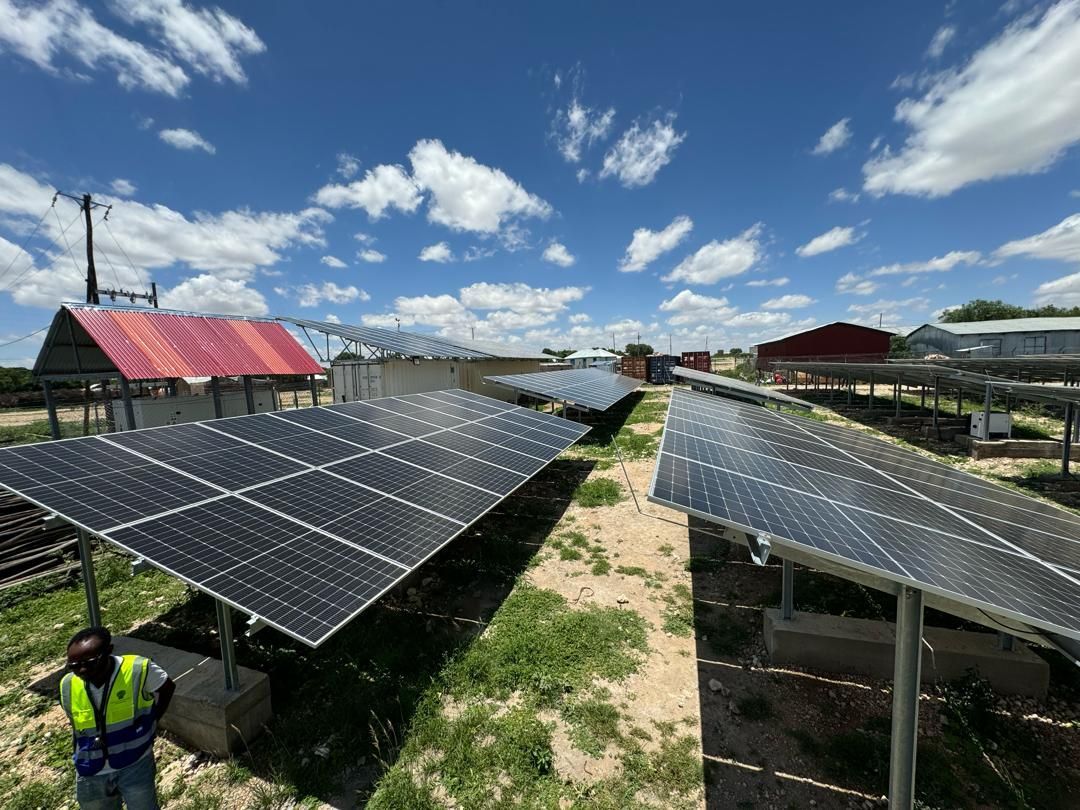
The African Development Bank Group’s Board of Directors has approved a $2 million reimbursable grant from the Sustainable Energy Fund for Africa (SEFA) to support development of two renewable power mini-grids in Ethiopia, under the Distributed Renewable Energy and Agriculture Modalities programme DREAM, for short.
Approved on July 17, this financing sits inside a larger $8 million programmatic envelope for DREAM that was first approved back in May 2024. It will fund the Lelicho and Murche mini-grid sub-projects, developed by RVE.SOL ETH Energy Generation Solutions, covering up to 50% of the mini-grids’ capital expenditure. The programme was built in partnership with the Government of Ethiopia and the Global Energy Alliance for People and Planet.
The part that actually matters in all this is: DREAM is designed to tackle the water-energy-food nexus by combining renewable mini-grids with productive-use agricultural demand, using what the programme calls an ABC model: Anchor loads, Business demand, and Community connections. The idea is to improve project economics, lock in revenue certainty, and build a repeatable pathway for private capital to flow into rural markets that banks normally avoid.
Ethiopia’s Minister of Water and Energy, Habtamu Itefa Geleta, framed it as an integrated approach tying energy access directly to irrigation and agricultural output. AfDB’s Director for Renewable Energy and Energy Efficiency, Daniel Schroth, called it a scalable model meant to turn energy access into a driver of jobs and livelihoods, not just lightbulbs. GEAPP’s Vice President for Africa, Carol Koech, added that pairing renewable power with irrigation and market access is what makes rural infrastructure economically viable in the first place.
But why is ABC Model the real story here? Strip away the acronyms, and this is what’s happening: mini-grid developers have known for years that rural electrification struggles financially because household demand alone doesn’t generate enough revenue to justify the capex. A village of 300 homes running lightbulbs and phone chargers is not a bankable customer base.
But add an anchor load, irrigation pumps, a cold-storage facility, an agro-processing unit and suddenly the economics flip. You’ve got predictable, high-volume daytime demand from a business, blended with residential demand at night. That’s the ABC model in one sentence: stack loads until the revenue curve actually supports the investment.
We’ve watched this exact logic play out on a smaller technical scale, pairing steady industrial load with variable domestic load to keep a system’s utilisation rate high enough to justify the generator capacity. Energy planning at any scale, rural mini-grid or rig-site power management, comes down to the same math: idle capacity is wasted money.
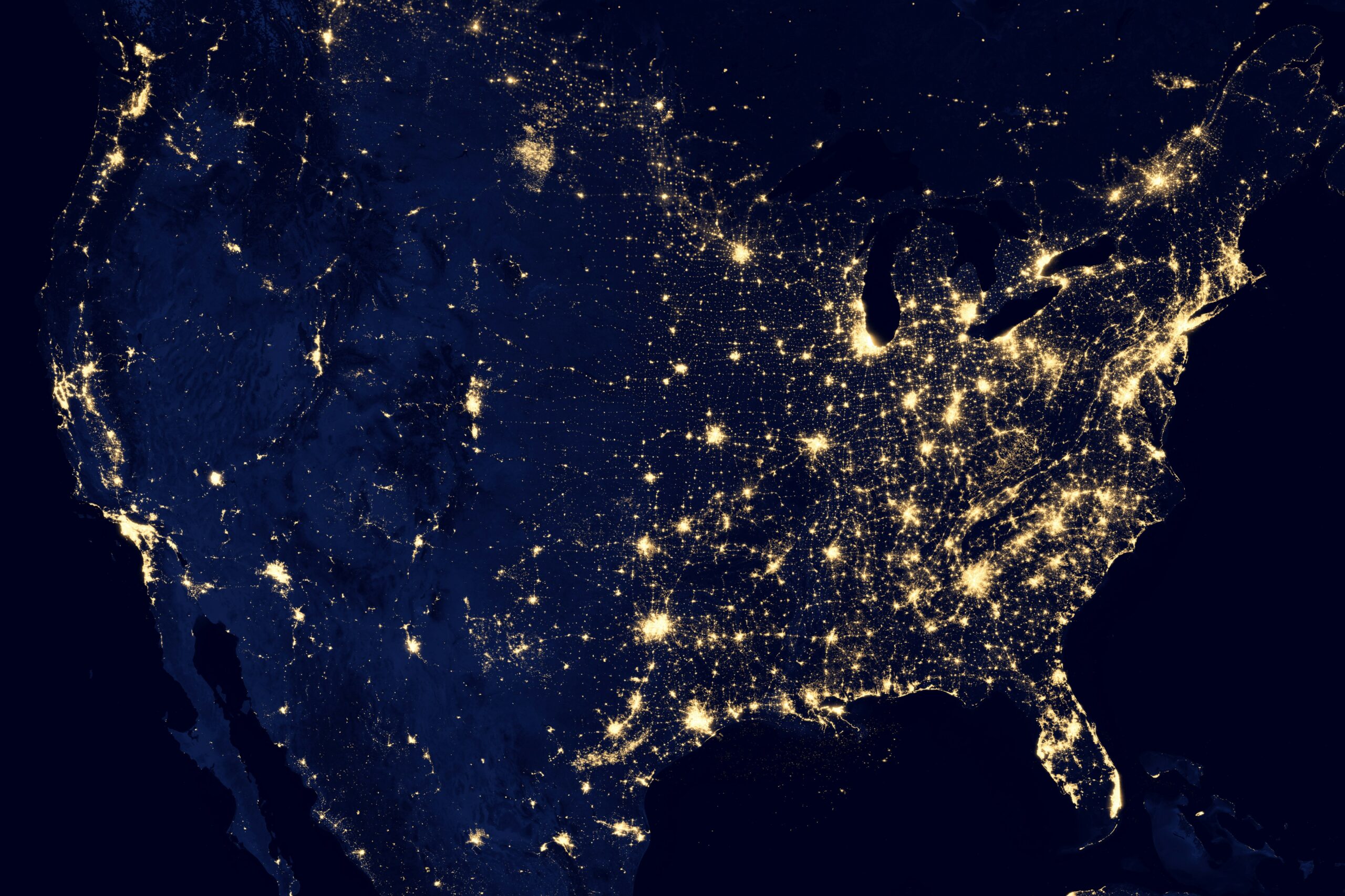
What this means for the rest of Africa is: Ethiopia isn’t the only country with this problem. Nigeria has over 80 million people without reliable grid access. Kenya, Tanzania, and the DRC all have rural belts where extending the national grid costs more per connection than the households will ever pay back. Mini-grids paired with productive-use loads are the only model that’s shown real signs of bankability at scale, and Mission 300, the AfDB’s push to connect 300 million Africans to electricity by 2030, is leaning hard on exactly this kind of blended finance to get there.
Two million dollars won’t move that needle by itself. But if Lelicho and Murche prove the ABC model works commercially, not just on paper, that’s the template GEAPP, AfDB, and private developers will replicate across a dozen more countries. That’s the actual bet being made here.
Every development finance press release describes its pilot as “scalable” and “first-of-its-kind.” I’ve read enough of these over the years to know that scalability is a claim, not a fact, until it survives contact with a second country, a different regulatory environment, and a government that isn’t as motivated as Ethiopia’s currently seems to be.
$2 million for two sub-projects is genuinely tiny. This is proof-of-concept money, not transformation money. The real test isn’t whether DREAM works in Ethiopia; it’s whether RVE.SOL or a similar developer can replicate the ABC model in Nigeria’s fragmented regulatory landscape, or in DRC’s infrastructure-starved east, without the same level of coordinated government buy-in Ethiopia is showing here. That’s a much harder problem than engineering a mini-grid.
This is a smart, small bet on a model that deserves to scale, and I’d put money on DREAM’s ABC framework showing up in at least two or three more country programmes within the next 18 months, likely backed by GEAPP or a similar blended-finance partner. But the countries that actually need this most, the ones with the weakest grids and the most fragmented rural agriculture, are exactly the ones where replicating Ethiopia’s level of government coordination will be the hardest. Watch execution, not the press release