



























In the quiet village of Bessi in Batibo Subdivision, a stream that has flowed for generations is now doing something extraordinary: it is generating electricity. Behind this remarkable achievement is Atud Jonathan Asaah, a Cameroonian renewable energy specialist whose vision has transformed a simple mountain stream into a functioning micro-hydropower plant capable of supplying electricity to an entire rural community. For more than eight years, Jonathan pursued what many considered an impossible dream: proving that locally designed and fabricated micro-hydropower systems could become a practical solution to rural electrification in Cameroon.
A Journey Built on Knowledge and Experience, Jonathan’s path into renewable energy is unique. While many know him as an accountant, his professional journey extends far beyond finance. He holds a Bachelor’s degree and an MBA in Accounting and Finance from the University of Buea and has spent over twelve years working in accounting, payroll management, social security compliance, and financial consultancy.
Driven by a passion for sustainable development, he pursued specialised training in renewable energy through internationally recognised institutions. His certifications include Applied Renewable Energy, Small-Scale Hydropower Planning and Operation, Photovoltaic Systems, and Solar Water Pumping technologies from RENAC Berlin and the Universitat Politècnica de València in Spain.
His practical experience took him across Kenya, Malaysia, and Borneo Island, where he worked alongside experts on community-based renewable energy projects. During his internship with Magiro Mini Grid in Gikoe Village, Kenya, and later at the Centre for Renewable Energy and Appropriate Technology (CREATE) in Malaysia, Jonathan witnessed firsthand how micro-hydropower was transforming isolated communities. “I knew this technology could work in Cameroon,” he recalls. “Our geography, our rivers, and our communities make it an ideal solution.”
Inspired by what he had seen abroad, Jonathan returned to Cameroon in 2019, determined to introduce the technology. He reached out to community leaders and local elites, hoping to secure support for the project. Few believed the idea could succeed. Rather than abandon his dream, he financed the project himself. Income earned from solar installations and accounting consultancy was gradually reinvested into the construction of what would become the Bessi Micro Hydropower Project.
Progress was interrupted by the escalation of the Anglophone crisis, forcing work to stop for several years. Construction resumed in 2025 with the rehabilitation of previously built civil structures. Perhaps the most remarkable aspect of the project is that many of its major mechanical components were designed and fabricated locally. The large Pelton turbine at the heart of the power plant was manufactured using scrap metal sourced from local markets, demonstrating that high-value engineering solutions can be developed using locally available resources. “This is not a commercial project,” Jonathan explains. “It is a research and demonstration project to show that Cameroon already has the natural resources needed to solve many of its rural electricity challenges.”
How the Technology works
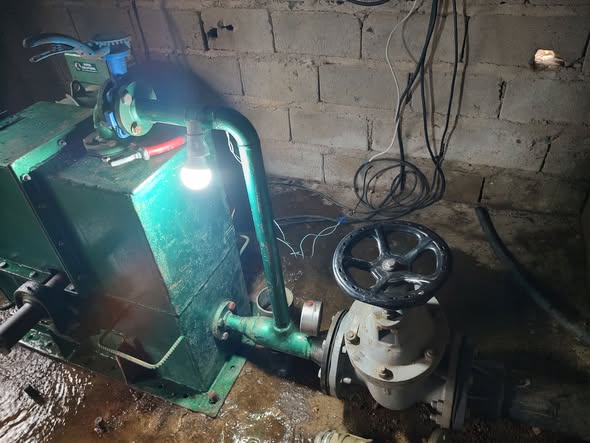
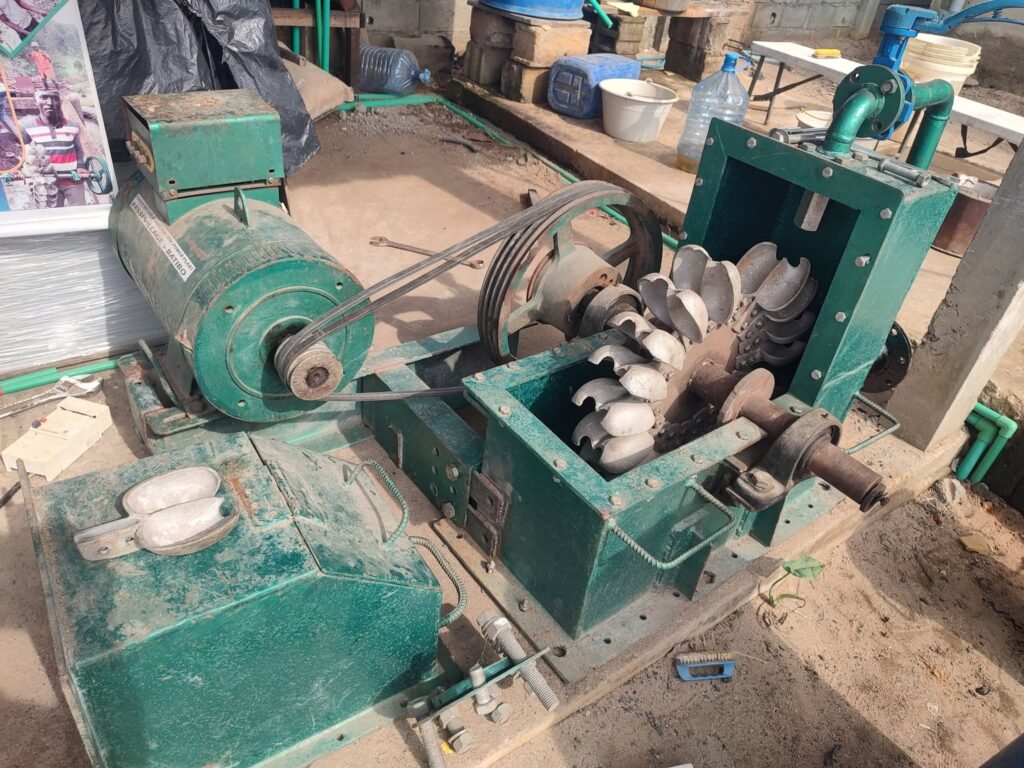
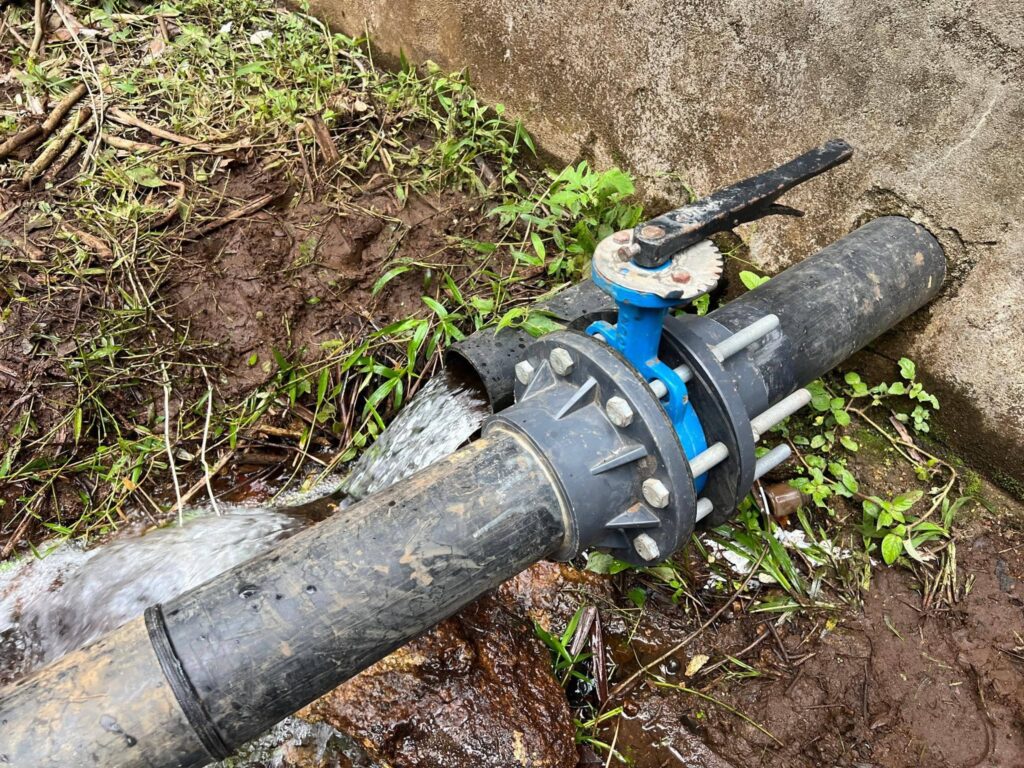
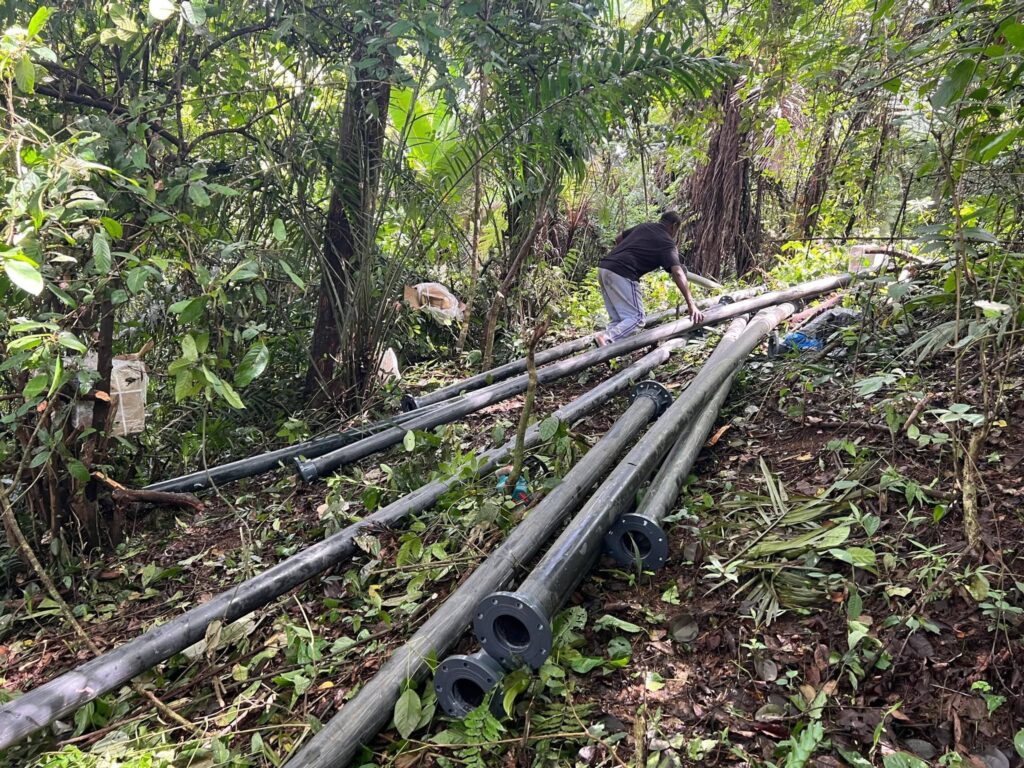
The Bessi installation is a run-of-the-river micro-hydropower system, one of the most environmentally friendly forms of renewable energy generation. Unlike large hydroelectric dams, this technology diverts only a portion of a flowing stream through high-pressure pipes positioned along a steep slope. As gravity accelerates the water, it strikes the blades of a Pelton turbine, causing it to rotate. The turbine drives an electrical generator, producing clean electricity without consuming fuel or creating greenhouse gas emissions. Because the system depends on the continuous natural flow of water, it can operate day and night with minimal maintenance. Jonathan notes that a properly manufactured turbine can remain operational for more than thirty years.
The current Bessi installation has a rated generation capacity of 15 kilowatts (three-phase), sufficient to comfortably supply electricity to more than 30 rural homes, although seasonal water flow variations may reduce production during the dry season. To manage this, energy distribution schedules can be introduced, ensuring electricity remains available during periods of highest household demand.
While the project is technically successful, Jonathan says the greatest challenge has always been funding. Designing and building a functioning turbine required numerous engineering trials, prototype testing, and repeated modifications. One particularly costly setback occurred while importing prototype Pelton buckets from Italy. The first shipment did not meet specifications, forcing him to purchase a second prototype before reproducing the components locally through Cameroonian foundries.
Throughout the process, Jonathan relied heavily on technical guidance from professional colleagues he met during his training in Kenya, Malaysia, Indonesia, and other countries. The project also benefited from extraordinary community participation.
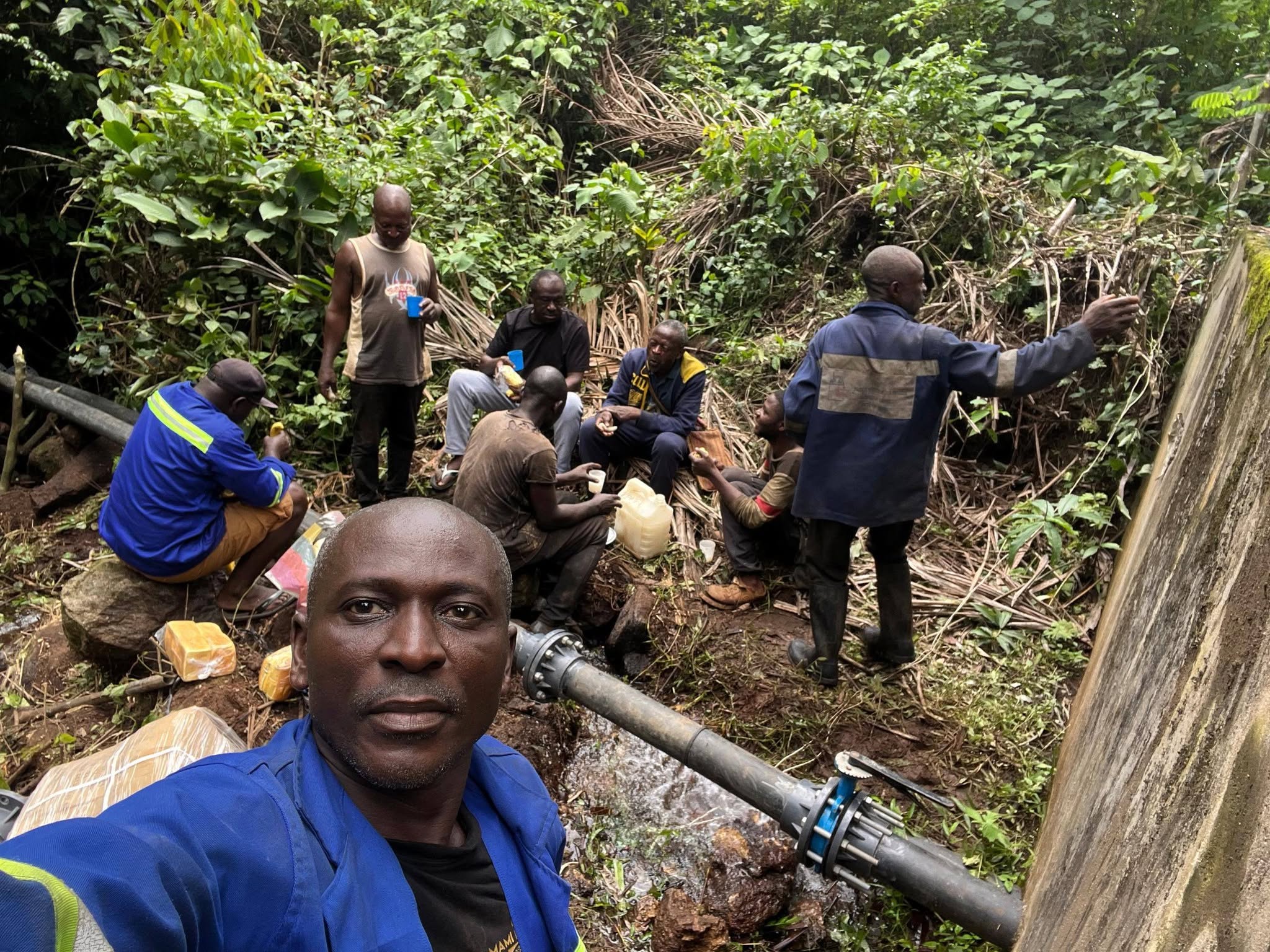
During the launch, the village quarter head laid the foundation stone and mobilised residents to provide voluntary labour for much of the civil construction work. “It became a community project,” Jonathan says.
Although the power plant is operational, its full potential has yet to be realised. Currently, approximately 500 metres of 16 mm power cable has enabled electricity to reach only eight households, despite the plant being capable of supplying more than thirty homes. Because of limited funding, power lines remain suspended on trees in several locations, with no utility poles installed.
Inside the powerhouse, an inadequately constructed concrete floor has begun to sink under equipment vibration, creating mechanical alignment concerns that could eventually affect generator bearings. Jonathan believes that relatively modest financial support could transform the installation into a fully operational model capable of serving the entire community.
For Jonathan, Bessi is only the beginning. His long-term vision is to obtain all the required legal authorisations to operate as an energy practitioner in Cameroon, conduct feasibility studies in other rural communities, and secure funding to replicate similar projects nationwide. Equally important is his commitment to developing local engineering talent. He plans to recruit and train young Cameroonians interested in renewable energy while collaborating with engineering faculties in state universities to provide students with practical, hands-on learning opportunities.
This ambition is rooted in experience as Jonathan previously attempted to establish a similar research installation in Makongi, near Buea, to support engineering students from the University of Buea. Unfortunately, theft of critical equipment, including high-pressure pipes, forced the project to be abandoned. Despite that setback, his determination remains unchanged.
Asked what message he would like to share with young engineers across Africa, Jonathan offers a perspective that reflects the philosophy behind his work. “Being an engineer is not simply having a certificate. A certificate only proves you have acquired knowledge. What truly matters is using that knowledge to solve the problems people face every day.”
He believes innovation should be driven by purpose rather than profit. “Many people only invest where they can immediately see financial returns,” he says. “But history shows that those who create lasting solutions often find that success follows naturally.” His story serves as a reminder that Africa’s development will depend not only on imported technologies but also on local innovators willing to transform ideas into practical solutions for their communities.
At Origin Africa 365, we believe Africa’s greatest innovations are often found where determination meets local ingenuity. The Bessi Micro Hydropower Project is a powerful reminder that sustainable development can begin with a single idea, a flowing stream, and the courage to build solutions despite limited resources.