


























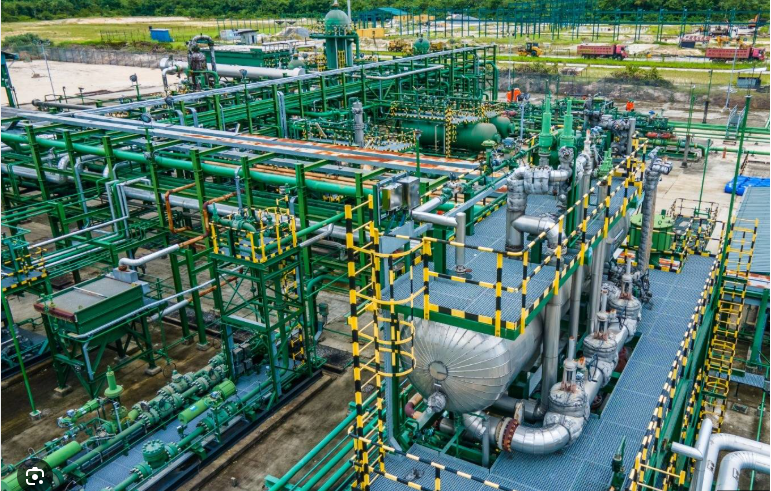
For most of the past decade, Nigeria’s oil story has been one of unrealised potential. Africa’s largest oil reserve holder sitting on 37.5 billion barrels of proven crude has repeatedly failed to convert that endowment into consistent production. Oil theft, pipeline vandalism, chronic underinvestment, and operational shutdowns turned what should have been a production growth story into a decade-long decline narrative.
April 2026 offered a different chapter. Nigeria’s crude oil and condensate production rose to an average of 1.66 million barrels per day in April 2026, with pure crude oil output reaching 1,488,540 barrels per day bringing the country to 99 percent of its OPEC production quota. It is the highest crude output Nigeria has recorded in 12 years, and it arrives at a moment when the stakes fiscal, geopolitical, and economic could not be higher according to premium times. The question is not whether this is good news. It is for sure. The question is whether Nigeria can hold it.
However what drove the Recovery? The April numbers were not the product of a single factor. They reflected simultaneous improvements across multiple terminals that had previously been sources of chronic disruption. Forcados recorded one of the strongest recoveries, with total production rising sharply to 7.35 million barrels in April from 5.18 million barrels in March, crude oil output alone jumping from 4.73 million to 6.65 million barrels. Bonny’s crude production rose from 7.99 million barrels in March to 8.36 million barrels in April, while the offshore Bonga field recorded 3.06 million barrels, up from 2.85 million in March. according to Premium Times.
Forcados in particular is significant. The terminal has historically been one of the most vulnerable to sabotage and theft in the Niger Delta, and its strong April performance reflects the improved security frameworks that analysts had been crediting with gradually stabilising production. BMI attributes the expected 2026 production rise to midstream infrastructure upgrades, ongoing debottlenecking efforts, and additional output from smaller fields.
The Petroleum Industry Act landmark legislation passed in 2021 to restructure Nigeria’s oil sector is also beginning to produce visible results. The Act and recent executive orders have attracted over $16 billion in new investments in 2025, boosting local participation and upstream activity. That capital is now translating into operational improvements at the terminal level.
With Brent crude trading above $120 per barrel during parts of April, Nigeria’s stronger output could significantly improve fiscal performance, especially as the government seeks to fund its 2026 budget and reduce pressure on external reserves.
Why This Matters? The Fiscal and Economic Stakes Oil is not just one sector of Nigeria’s economy. It is the engine that funds the state.Crude oil exports remain Nigeria’s primary source of foreign exchange inflows. Government revenue performance is closely tied to production volumes and global oil prices. Sustained output growth could strengthen external reserves and reduce fiscal strain according to Nairamerics. Nigeria has been operating under severe fiscal pressure for years, a combination of subsidies, currency volatility, and the gap between budgeted and actual oil revenues.
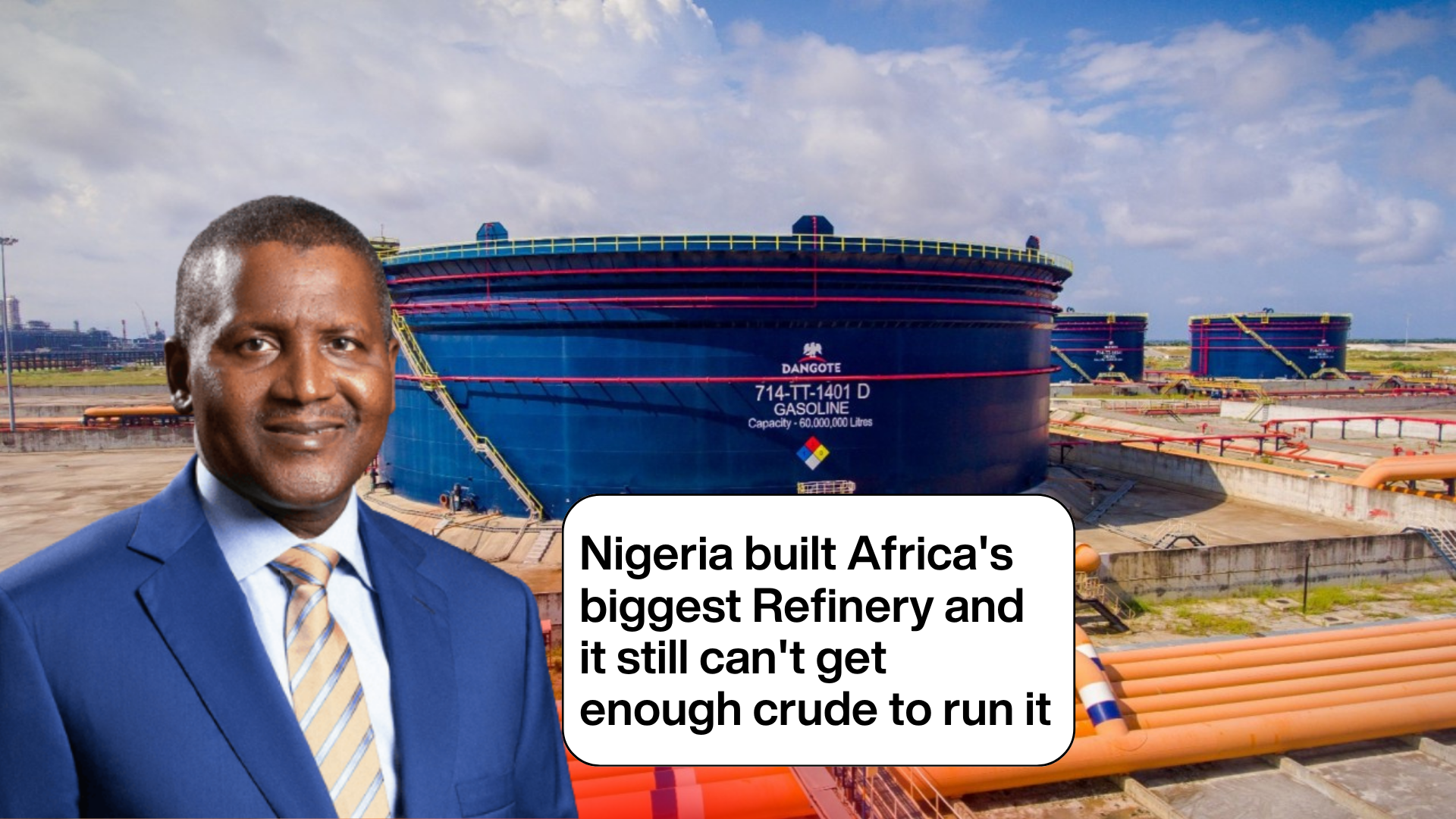
The Federal Government adopted a 2.6 million bpd oil production benchmark for 2026, but used a more conservative 1.8 million bpd for actual budget planning, an acknowledgment that the ambitious headline target was unlikely to be met consistently. The April figure of 1.49 million bpd crude, while well below both benchmarks, still represents meaningful progress from the chronic underperformance of recent years. There is also the Dangote Refinery dimension. While the Dangote Refinery has already reduced Nigeria’s reliance on imported petroleum products, it still imports approximately 47% of its crude needs from sources including the United States, Brazil, Angola, Ghana, and Equatorial Guinea highlighting a major opportunity for domestic crude supply to substitute for imports. As Nigerian crude production recovers, the alignment between domestic production and domestic refining demand becomes an increasingly viable proposition one that could transform Nigeria’s relationship with its own oil wealth. Lagoschamber
Every Nigeria oil recovery story carries a caveat, and this one is no different. Nigeria has struggled to consistently meet its OPEC production quota over the past year due to a mix of security and infrastructure challenges. Oil theft, pipeline vandalism, and years of underinvestment in upstream infrastructure have constrained production capacity. Nigeria missed its 1.5 million bpd quota for six consecutive months the last time it was met was July 2025.
Analysts warn that sustaining higher output will depend on continued pipeline security, stable operations at key terminals, and faster investment in upstream infrastructure. While the April performance is encouraging, consistency remains critical if Nigeria is to maintain production near quota levels and fully benefit from higher global oil prices.
Security remains the most unpredictable variable. BMI warns that worsening security is a significant threat rising kidnapping incidents in 2025 strained the country’s fragile security landscape, and further insecurity could disrupt agriculture and oil output, discourage investment, and force the government to divert funds from infrastructure and social programmes. The Electricity Hub
Geopolitical exposure adds another layer of uncertainty. Deteriorating relations with the United States could trigger higher tariffs or sanctions, restricting oil exports, limiting access to financing, and undermining investor confidence. For a country where oil accounts for the bulk of foreign exchange earnings, external political dynamics are never simply background noise. The Electricity Hub
From the African angle this i what Nigeria’s recovery means for the Continent Nigeria’s oil performance is not a domestic story. It has continent-wide implications. As Africa’s most populous country and largest economy, Nigeria’s fiscal health directly affects the economic stability of the entire West African subregion. When Nigeria’s revenues are under pressure, infrastructure investment slows, development finance tightens, and the government’s capacity to participate in continental initiatives including AfCFTA implementation is constrained. A recovering oil sector relieves some of that pressure.
For Cameroon specifically, the relevance is immediate. Cameroon is itself an oil producer though on a much smaller scale and shares both a border and deep economic ties with Nigeria. Nigerian fiscal stability supports regional trade, reduces migration pressure, and sustains demand for goods and services across the subregion. What happens in Abuja’s budget office eventually reaches markets in Douala and Yaoundé.
There is also a broader strategic lesson. Nigeria’s recovery, where it is happening, is driven by regulatory reform, improved security, and new investment not by discovering new reserves. The country has known where its oil is for decades. What changed is the institutional and security environment governing access to it. That distinction matters enormously for other African oil producers grappling with similar structural challenges: the path to production recovery runs through governance and security first, capital second.
Finally, the energy transition context cannot be ignored. Global oil demand is not going to zero tomorrow oil production is projected to remain a multi-trillion dollar global industry through 2040 but the window for African oil producers to maximise returns from existing reserves is narrowing as the energy transition accelerates. Nigeria’s 12-year production high is, in that context, both an economic recovery and a race against time. The revenues generated in the next decade need to be invested in the diversified economy that will sustain Nigeria and West Africa beyond the petroleum era.
April 2026’s production figure is a milestone. It is not a solution. Nigeria’s crude output in May 2026 climbed further to 1.70 million barrels per day the strongest result in 11 months, exceeding the OPEC allocation of 1.5 million barrels per day. The trajectory, for now, is positive. But Nigeria has been here before brief recoveries followed by renewed disruption. The structural challenges of pipeline security, upstream investment, and refining capacity have not been permanently resolved. What has changed is that the policy environment, the security frameworks, and the investment climate are all moving in the right direction simultaneously and that convergence, if sustained, is what turns a data point into a trend. Africa’s largest oil giant is pumping again. The continent is watching to see if it lasts.