

















Three metal spheres, hand-assembled by South African and Algerian students, tested by volunteers, funded on what one NASA scientist openly called a shoestring budget, and they’re going to the Moon in 2029. Not as cargo, not as a “thank you for participating” plaque. But as a working science instrument, riding on China’s Chang’e-8 lander, listening to radio signals from the edge of the observable universe that Earth is too noisy to hear. If that sentence doesn’t stop you for a second, read it again.
The mission is called BALLS, meaning Bounced African Low Lunar Sphere, and it’s the flagship of the Africa2Moon initiative. Carla Mitchell, the mission director and SARAO’s Africa Program manager, described it as Africa’s shift from being a participant in space science discussions to becoming an active contributor to humanity’s exploration of the Moon and deep space, according to Global Times
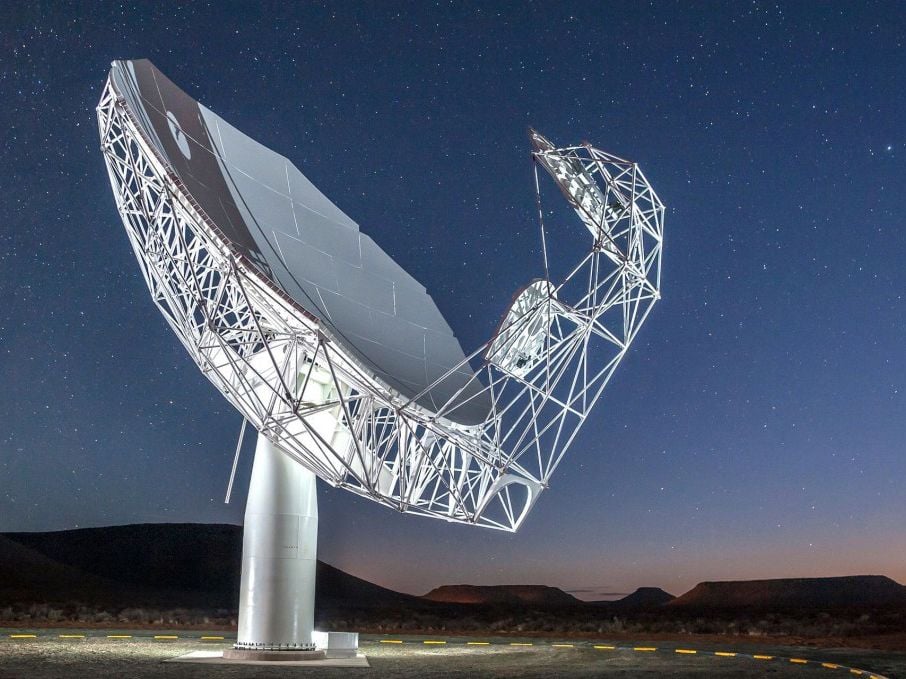
Now the mechanics: three spherical probes, each carrying low-frequency radio telescope antennas designed to observe frequencies below 20 megahertz. Once deployed near the lunar south pole, they’ll form a small radio astronomy array, the Bounced African Low Lunar Sphere (BALLS) project, which aims to deploy low-frequency radio astronomy antennas on the lunar surface as part of Chang’e-8, scheduled to launch around 2029.
Why the Moon, and why frequencies that low? Because frequencies below around 50 MHz are difficult to study from Earth due to interference caused by the planet’s ionosphere and human-generated radio signals. The Moon provides a uniquely quiet radio environment, particularly on its far side, where natural shielding from Earth’s radio interference creates opportunities to study extremely low-frequency signals from the Universe. Earth is simply too loud. The Moon isn’t, according to Daily Galaxy
But who actually built this? This is not one lab in isolation. Teams at Petrawell in Cape Town, the Aerospace Systems Research Institute at the University of KwaZulu-Natal, and the Electronic Systems Laboratory at Stellenbosch University manufactured the components of the structural and functional BALLS models, which were assembled in April 2026 and delivered to China’s Chang’e-8 team for testing.
The mission itself sits under the Foundation for Space Development Africa, working alongside SARAO, the South African National Space Agency, the National Institute for Theoretical and Computational Sciences, and institutions in Kenya, Ghana, Botswana and across the continent. This isn’t a South Africa solo act. It’s continental, even if South Africa is carrying most of the engineering load right now.
The hardware side is real, not conceptual. According to Mitchell, the structural engineering model is complete, the project has moved into qualification testing, and the electronics have already cleared electromagnetic compatibility testing and extended burn-in testing the kind of grinding, unglamorous validation work that decides whether hardware survives contact with reality, not just a lab bench.
Strip away the Moon and look at what’s actually being built: African-designed instrumentation qualified to operate in one of the harshest engineering environments that exists no atmosphere, extreme thermal swings, radiation, zero margin for error on power and electronics. That’s a capability transfer, not a photo op. Engineers at Stellenbosch, UKZN, and Petrawell are now credentialed on qualification and EMC testing standards that translate directly into telecoms infrastructure, satellite ground systems, defence electronics, and industrial monitoring the same disciplines underpinning South Africa’s own MeerKAT and Square Kilometre Array work, which SARAO already runs.
And the ambition doesn’t stop at three spheres. The second phase of the mission aims to deploy 55 antennas on the far side of the Moon, one for each nation in Africa, a symbolic and literal statement that every African country gets a stake in this, not just the ones with existing space agencies.
However, Let’s be honest about what this actually is right now: a technology demonstrator, not an operating observatory. Three spheres proving a concept is a long way from 55 antennas forming a real lunar radio array. The gap between “selected as an international payload” and “successfully operating on the lunar surface in 2029” is where a lot of ambitious space programs quietly go to die; mission delays, budget shortfalls, and hardware failures are the norm in this industry, not the exception.
And the funding model should give everyone pause, even while it’s inspiring. A Notre Dame lunar science specialist put it plainly: he was amazed the whole thing is being pulled off “on a shoestring budget by volunteers.” That’s a beautiful underdog story. It’s also a fragility. Volunteer-driven, thinly-resourced engineering programs are exactly the kind of initiatives that stall the moment key people move on, or funding dries up, and Africa’s space agencies are not exactly flush with cash to backstop that risk.
Worth flagging too: this piece comes from Global Times, a Chinese state-affiliated outlet, built around a single exclusive interview with Mitchell. It’s not independently adversarial reporting; nobody’s asking the hard questions about budget risk or mission delay probability in that piece. I pulled the engineering detail and funding context from Space.com, Daily Galaxy, and the Foundation for Space Development Africa’s own site to round out the picture.
This is the most important African space story of the decade, and almost nobody outside the continent’s engineering circles is talking about it. A shoestring-budget, volunteer-built instrument getting selected onto a Chinese lunar lander over payloads from Italy, Russia, and Turkey isn’t charity; it’s proof South Africa’s engineering base can compete on merit against nations with a hundred times the space budget. If BALLS actually reaches the lunar surface intact in 2029, it does more for African STEM recruitment than a decade of “Africa needs more engineers” panel discussions ever will. Fund it properly, or watch the world’s best example of what African engineering can do on a shoestring get told to wait one more launch window.