











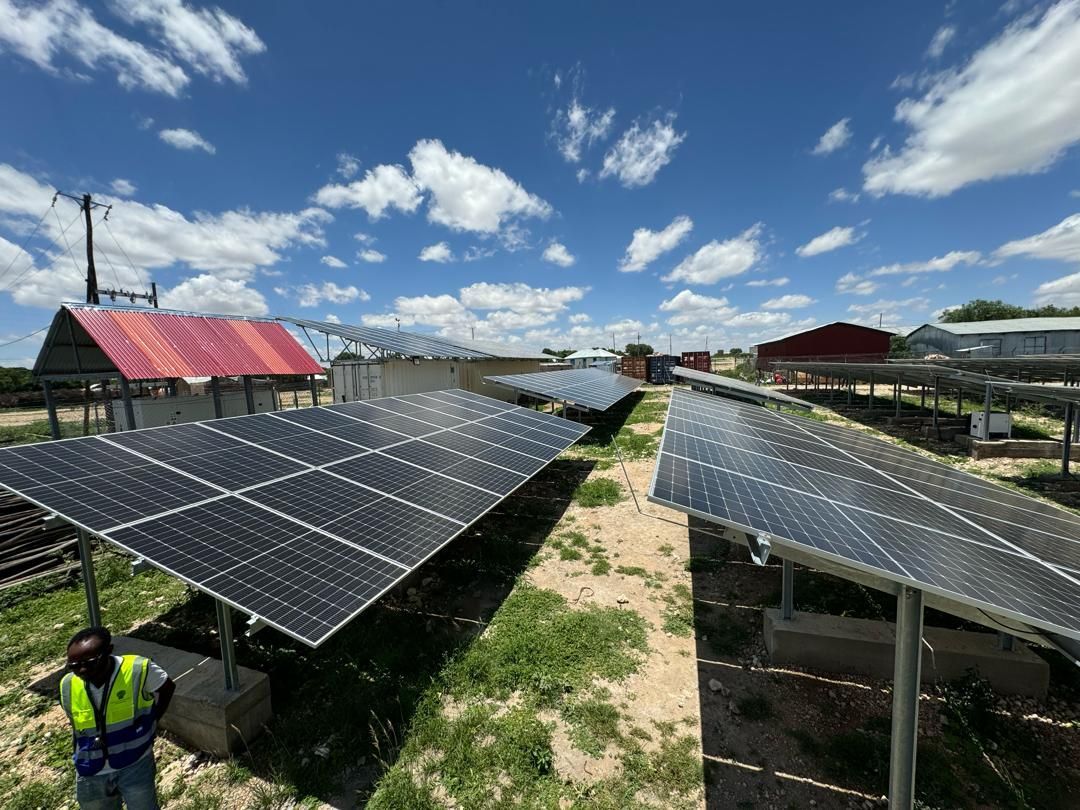



Google announced its opening of Africa’s first Applied AI Lab in Accra, Ghana, giving selected startup founders access to Google’s AI models, technical mentorship, and the part that actually matters, venture capital partners who’ll write checks once the prototype works. I’ve built digital tools without any of that safety net. Site Scope IQ started as a scrappy dashboard idea because I was tired of watching field technicians continue making errors in solar survey estimates and quotations. ELTOMS (Enterprise Logistics Technical Operations Management system) came out of the same frustration; we needed something that talked to us in real numbers, not vibes, helping us track our work orders, Clients, Technicians, assets in use, etc. No applied lab. No access to frontier models on tap. Just a laptop, stubbornness, and a lot of trial and error at 11 pm after the “real” job was done.
So when I read that Google is handing African founders a lab with actual model access and investor introductions, my first reaction wasn’t excitement. It was: finally, someone was addressing the gap that actually kills African AI startups. The Accra lab sits inside Google’s AI Community Centre and opens applications until 31 August 2026. It’s not Google’s first move in Ghana — they set up Africa’s first AI research centre there back in 2019 under Moustapha Cissé, and that team has quietly done real work on flood forecasting, maternal health, and African language models. In 2025, Google dropped another $37 million into the Community Centre for training and digital infrastructure.
This new lab is different in one crucial way: it’s not about research anymore. It’s about turning research into companies. Founders building AI products in software development, knowledge management, creativity, entertainment, and workplace tools get technical support, model access, and a pipeline to Google’s AI Futures Fund and its VC network. Google’s James Manyika framed it as helping African founders build products that can compete internationally, not just locally relevant tools, but actual global contenders.
Google also confirmed at the Johannesburg Cloud Summit that it blew past its five-year $1 billion Africa investment pledge, and stacked the Accra lab alongside four other announcements, including an undersea cable hub in South Africa’s Eastern Cape and an accelerator targeting 50 African startups by 2028.
A win for one is a win for all. This does not matter only for Ghana but for African Founders, and here’s the thing nobody’s saying loud enough: Africa’s unicorn count is embarrassingly thin, and almost all of it is fintech out of Nigeria, Egypt, and South Africa. Not because African founders can’t build AI products, I work with technical teams across Cameroon, Nigeria, and Kenya who are sharp enough to compete anywhere. It’s because the ecosystem between “good idea” and “fundable company” is broken. You can have a working model and still die in the valley between prototype and product, because you don’t have compute, you don’t have warm intros to investors, and you’re explaining basic infrastructure problems to VCs who’ve never had to route around an Eneo, Socadel or NEPA outage.
A lab that hands you model access and capital access in one building is solving two bottlenecks at once. That’s rare. Most “innovation hub” announcements solve one and leave you to figure out the other yourself. Kenya, Rwanda, and Nigeria should be watching this closely, not to complain Ghana got picked, but to ask why their own governments and telcos aren’t building equivalent infrastructure. Orange did it with us on Mbineko in Cameroon because they saw commercial upside in forest monitoring data, though not an AI lab in its entirety, but it was still cool. There’s no reason MTN, Safaricom, or Airtel Africa couldn’t be doing the same thing with applied AI labs of their own instead of waiting for Google to plant the flag.
Where I’m Sceptical, let’s not pretend this is pure altruism. Google gets first-look access to whatever these startups build, deep relationships with the most promising African AI talent before competitors even know they exist, and a favourable footprint in a market everyone from Microsoft to Amazon is racing to claim. That’s fine, it’s business, but founders walking into this lab need to read the fine print on IP, data usage, and equity terms tied to the Futures Fund money. “Selected founders” also means most applicants get nothing. One lab, one city, limited seats, this isn’t a continental fix, it’s a pilot with good PR. And Accra becoming Africa’s default AI capital by default, simply because Google planted there first, should worry other hubs. First-mover advantage compounds fast in this game.
This lab is a genuinely good move, and I’ll say the unpopular part: African governments should be embarrassed a foreign company is building the startup infrastructure they should’ve built themselves years ago. Google didn’t do this out of charity; they did it because nobody else moved fast enough to claim the territory first. If Nigeria, Kenya, and Cameroon don’t respond with their own applied AI infrastructure within the next 18 months, Accra becomes the permanent centre of gravity for African AI, and everyone else becomes a satellite market. Bet on it.