



















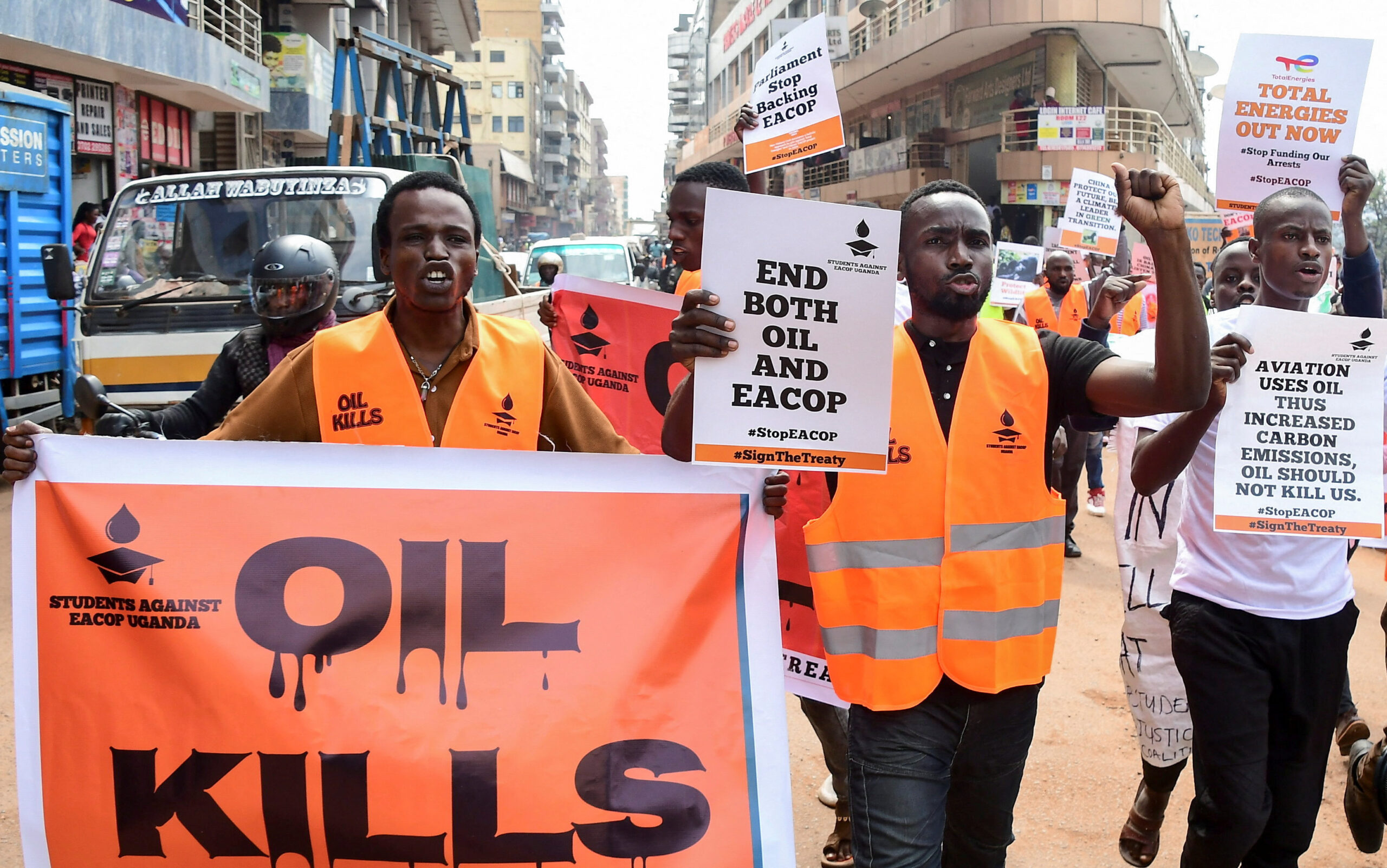
Four Ugandan farmers have filed a case at the High Court in London against EACOP Ltd, the UK-registered company behind the East African Crude Oil Pipeline. Their lawyers, from the London firm Leigh Day, are asking English judges to apply Ugandan constitutional, environmental, and climate law against a company incorporated in England and Wales. If that sounds like a legal pretzel, it kind of is, but it’s a deliberate one. The lawyers argue the UK court has jurisdiction because EACOP Ltd is registered in England and Wales, and they contend the claimants face a real risk of not getting a fair hearing in Uganda, a claim the UK court hasn’t tested yet.
The pipeline itself is a controversial 1,443-kilometre pipeline, majority-owned by TotalEnergies, designed to carry crude from Uganda’s oilfields for export through Tanzania. About 80% of it has already been built, according to its own developers. EACOP Ltd, the operating company being sued, is jointly owned by TotalEnergies, Cnooc, and the state oil companies of Uganda and Tanzania. The farmers are seeking remedies that strike at the heart of the project’s commercial viability, including an injunction to physically stop oil from being transported through the pipeline, plus compensation under Ugandan law. Climate Home News
That last part matters. This isn’t a “pay us after the damage is done” lawsuit. Climate litigation expert Dr Joana Setzer at LSE’s Grantham Research Institute says what makes this case stand out is that it tries to prevent environmental harm before it happens, rather than seeking damages afterwards, combining corporate accountability with prevention in one move.
Why land in a UK court at all? The short answer is that the company’s paperwork lives there. EACOP is a joint venture led by TotalEnergies with smaller stakes from Ugandan, Tanzanian, and Chinese national oil firms, but the actual operator, EACOP Ltd, is registered to an office in London’s Canary Wharf. Company registration in England, therefore fair game for English courts. It’s the same jurisdictional trick that’s worked before Leigh Day’s Matthew Renshaw cited past UK litigation against Shell, Vedanta, and Cape PLC as precedent for British courts hearing cases over harm caused outside the UK.
There’s also a backstory to why they didn’t just sue in Uganda. A prior legal challenge was filed at the East African Court of Justice before this UK case, but it was dismissed on procedural grounds; the appeal missed the mandatory 60-day filing window, so the substantive arguments were never even examined. So this is very much Plan B, executed with London precision.
One of the claimants, Samuel Abidimba, told reporters that he lost 42% of his land to the project and wasn’t adequately compensated, not enough to buy another piece of land big enough to grow food for his family. Another claimant, Racheal Tugume, says she was displaced from her land by construction that damaged local rivers, wildlife, and the ecosystems communities depend on, right as erratic weather from climate change is already hammering them.
Zoom out and the numbers get bigger. The claimants say the project affects more than 100,000 people through land acquisition and crosses critical freshwater systems and protected habitats. The pipeline cuts through the Lake Victoria basin, one of East Africa’s major freshwater systems, a critical water source for roughly 40 million people, according to CNBC Africa
EACOP isn’t just a villain in a trench coat. The pipeline is the infrastructure that unlocks Uganda’s estimated 6.5 billion barrels of oil, connects the country’s production to international markets, and is expected to create jobs and business opportunities across Uganda and Tanzania. For a landlocked country sitting on that much crude with no way to move it, EACOP is the difference between “oil reserves” and “oil revenue.”
And the pushback isn’t just coming from Total’s PR department. NJ Ayuk, Executive Chairman of the African Energy Chamber, has called the UK litigation “colonialism 2.0,” arguing that foreign-funded legal campaigns are becoming a tool for delaying African energy projects and that decisions about Uganda’s energy future should be made in Uganda, not in London. That’s not a throwaway line, it’s a real tension African readers should sit with: who gets to decide how Africa develops its own resources, and does routing that decision through a London courtroom actually serve Ugandan farmers, or make for a cleaner headline in Western media?
An injunction stopping EACOP from operating, weeks before first oil, feels more like a symbolic shot than a realistic outcome. The High Court will first have to decide whether it even has jurisdiction to hear the case before it touches the substance of the claims. That’s a procedural fight that could eat months, and the pipeline is already 80% built. Nobody unbuilds a $5.6 billion heated pipeline because a UK judge frowns at it. But this is the part worth paying attention to: the lawyers are also citing dozens of international banks and insurers that have already declined to finance or insure the project. That’s the actual pressure point. Courts move slowly. Capital moves fast, and capital doesn’t like headlines about displaced farmers and unpaid compensation.
Why it matters for African tech and infrastructure readers is that If you build, deploy, or manage infrastructure in Africa energy, telecom, digital, it doesn’t matter this case is a preview of your future paperwork. Foreign-backed infrastructure projects across the continent (fibre backbones, data centres, mining operations, power plants) increasingly get financed and legally structured through entities registered outside Africa. That’s not automatically sinister; it’s often how you unlock capital nobody local can supply. But it also means the legal battlefield for African land, water, and community rights is quietly shifting to London, Paris, and Delaware courtrooms. Anyone doing technology deployment work on the continent, yes, including projects like Mbineko, where IoT sensors and LiDAR were used to monitor forest health in near real-time, should be watching how “who’s accountable, and where” gets decided in cases like this. It’ll shape how future infrastructure projects structure their compliance and community-engagement obligations from day one, not as an afterthought.
I predict the UK court will accept jurisdiction, EACOP will keep building regardless, and this case won’t stop first oil in 2027, but it will make every future TotalEnergies-style African mega-project structure its UK-registered entities more defensively, and that quiet legal engineering will end up costing more than the compensation Samuel Abidimba should have gotten in the first place.