



























Africa’s digital transformation has entered a new phase, where access to technology is no longer the only priority. Increasingly, governments across the continent are asking a bigger question: who owns the infrastructure powering Africa’s digital future?
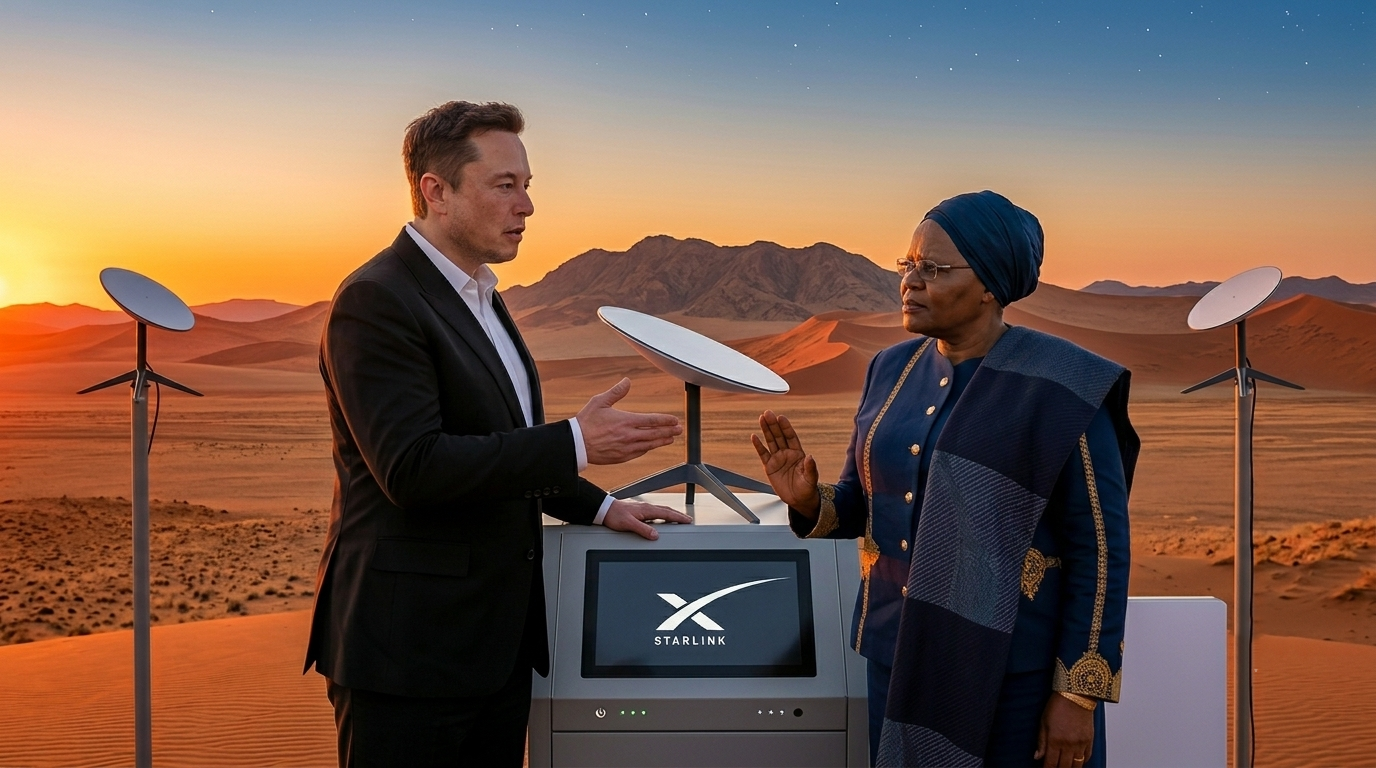
This debate is now playing out in Namibia, where Elon Musk’s satellite internet company Starlink has suffered another setback after regulators rejected its application to operate in the country. The decision highlights a growing tension between Africa’s need for advanced connectivity solutions and its desire to ensure that foreign investments create local economic participation.
The Communications Regulatory Authority of Namibia (CRAN) rejected Starlink’s application for a telecommunications licence and access to spectrum after determining that the company did not satisfy key regulatory requirements. A major issue was ownership. Namibia’s telecommunications rules require operators to meet local ownership conditions, with regulations requiring significant local participation in telecom businesses. Starlink’s subsidiary was considered fully foreign-owned and did not meet those requirements.
For Starlink, which has expanded rapidly across Africa by providing satellite-based internet connectivity to remote and underserved areas, the decision represents another regulatory challenge on the continent. At first glance, this may look like a disagreement between a global technology company and a national regulator. However, the implications go much deeper.
Africa remains one of the world’s largest opportunities for digital growth. Millions of people, businesses, schools, and communities still require faster and more reliable internet access. Traditional internet infrastructure such as fibre networks and mobile towers can be expensive and difficult to deploy, especially in rural and remote regions. Satellite internet services like Starlink offer a different approach by delivering connectivity from space without requiring the same level of physical infrastructure on the ground.
For African startups, entrepreneurs, schools, and businesses, improved connectivity could unlock opportunities in areas such as Remote work, Digital education, Artificial intelligence adoption, Cloud computing, E-commerce, Financial technology, and smart agriculture. However, African governments are increasingly asking whether these benefits should come only through foreign-owned platforms or through partnerships that also strengthen local economies.
The Bigger Debate is Connectivity vs Digital Sovereignty; Namibia’s decision reflects a wider conversation happening across Africa. Many governments want international technology companies to invest, but they also want local businesses, entrepreneurs, and citizens to participate in the economic value created by these technologies.
The argument from regulators is that ownership requirements can help ensure that profits, skills development, and decision-making power are not concentrated outside the continent. On the other hand, critics argue that strict ownership rules could slow down access to technologies that can solve urgent infrastructure challenges. This creates a difficult balancing act: Africa needs innovation, but it also wants innovation that supports long-term economic independence.
Despite regulatory challenges, Starlink has become one of the most discussed technology companies in Africa’s connectivity landscape. The company’s low-earth-orbit satellite network has attracted interest because it can provide high-speed internet in areas where traditional telecom infrastructure struggles. Several African countries have already embraced the service, while others continue reviewing regulatory, security, and ownership concerns. The challenge for Starlink and similar technology companies will be adapting their global business models to Africa’s unique regulatory environments.
For African startups and telecom innovators, this situation creates both challenges and opportunities. Local technology companies may benefit from policies encouraging domestic participation, partnerships, and investment. Governments may increasingly look for African firms capable of working alongside global technology providers rather than simply importing foreign solutions.
The future of Africa’s digital economy may not be about choosing between global innovation and local ownership. It may be about creating partnerships where international technology companies bring capital, expertise, and infrastructure while African companies contribute local knowledge, talent, and market understanding.
Namibia’s decision sends a clear message: entering African markets is not only about bringing technology, it is also about understanding the economic and policy expectations of the countries being served. As Africa continues its digital transformation journey, the companies that succeed will likely be those that see the continent not just as a market, but as a partner.
The Starlink debate is therefore bigger than one company. It represents a defining question for Africa’s future: How can the continent embrace global technology while ensuring that the value created also remains within Africa?