





















Like Marché Ancien Troisième in Douala, Cameroon, Computer Village Ikeja, Lagos, Nigeria, has seen a lot of things. Grey market phones. Fake chargers sold as “original.” That one guy who can fix any laptop motherboard with a heat gun and pure faith, typical of Ancien Troisième. What it hasn’t seen much of, until now, is a global tech brand walking in and saying, “we’re setting up shop here, officially, no middlemen.”
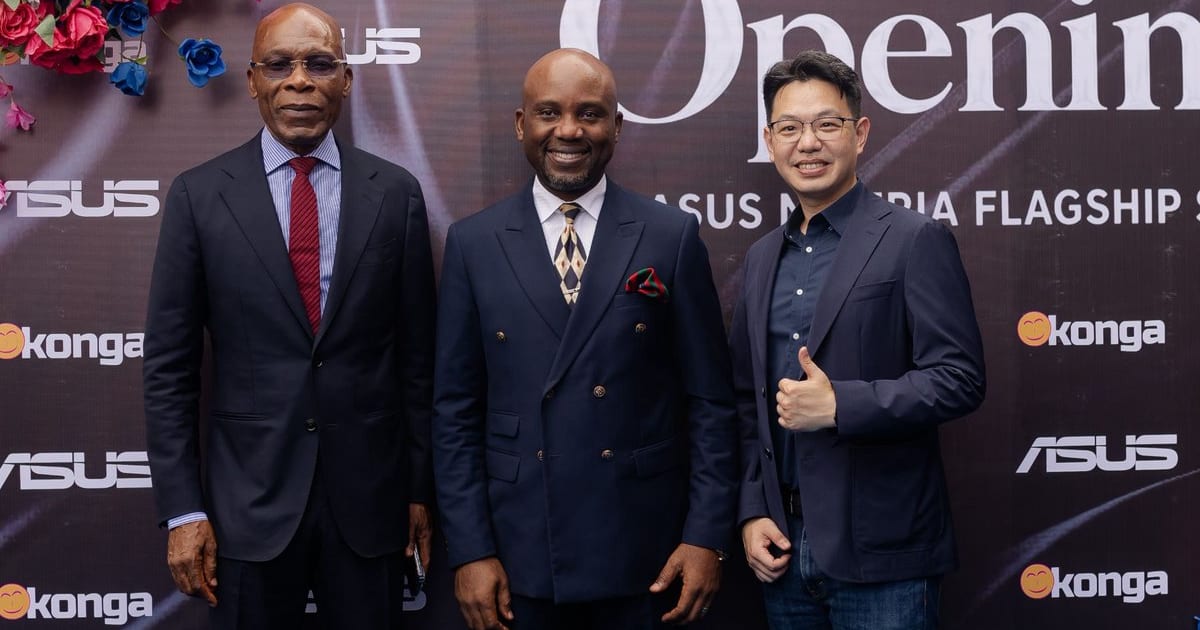
That changed this week. ASUS just commissioned its first flagship experience store in West Africa, tucked right into Computer Village, Ikeja. The partner on this one is Konga, and the store was formally opened by Nigeria’s Minister of Innovation, Science and Technology, Dr Kingsley Tochukwu Udeh. Zinox Group Chairman Leo Stan Ekeh and ASUS’s E.EMEA General Manager Aaron Tsai were also in the room.
What’s actually in the store isn’t a shelf-and-till setup. The store gives Nigerians hands-on access to authentic ASUS hardware: premium laptops, gaming rigs, AI-powered PCs, plus an interactive digital display so you can explore the tech before you commit your naira. Every device bought in-store or via Konga online comes with a one-year replacement warranty, no extra charge.
If you’ve ever bought a “new” laptop in that market and spent the next six months praying it wasn’t a refurb with a fresh sticker, you understand exactly why that warranty line matters more than the display screens. Dr Kingsley Tochukwu Udeh, Minister of Innovation, Science and Technology, called the store a symbol of confidence in Nigeria’s innovation ecosystem, and tied it to the Federal Government’s push for a one-trillion-dollar economy, the kind of number politicians love to say and rarely explain the roadmap for. He also announced that Leo Stan Ekeh will now front the government’s Youth and Students in Innovation initiative, aimed at getting young Nigerians building tech skills, not just consuming tech products.
Out of scepticism, A flagship store is retail infrastructure, not digital infrastructure. It puts genuine devices in front of Nigerian consumers with less fakery risk, and that’s a real, measurable win for a market long plagued by counterfeit hardware. But “symbol of confidence in the innovation ecosystem” is doing a lot of heavy lifting for what is, functionally, a well-executed brand launch in partnership with an e-commerce player. One store in Lagos doesn’t move the needle on device access in Kano, Enugu, or Maiduguri. And announcing that a Chairman will “champion” a youth innovation initiative isn’t the same as publishing a funding structure, a curriculum, or a timeline. I’d want to see what “champion” means in six months: a mentorship program, actual capital, or just a name on a press release.
Why this matters beyond Lagos is that Nigeria’s consumer tech market has run for years on a parallel economy of grey imports, because official distribution never fully solved for price and access at scale. A brand-direct flagship with warranty backing is a small but real correction, the kind of move that, if replicated in Abuja, Port Harcourt, or Kano, actually starts to shift where Nigerians trust to buy their next machine. Konga’s involvement also matters: it means this isn’t just a physical footprint; it’s tied into an e-commerce rail that already reaches buyers outside Lagos. That distribution layer is the part worth watching, more than the ribbon-cutting.
This store will get replicated by at least one more global brand in Lagos within 12 months; Nigeria’s device market is too large and too underserved by legitimate channels for competitors to sit this out. But unless the Youth and Students in Innovation initiative publishes concrete deliverables within the same window, it’ll quietly join the long list of Nigerian government tech initiatives that got a great launch event and a forgettable Wikipedia footnote. Either way, we need this in Cameroon