








R2.2 trillion. That’s not a typo, and it’s not a number South Africa throws around lightly. That’s the size of the investment pipeline South Africa just put on the table in Beijing, and it tells you exactly how serious the country’s power crisis has gotten, and how far it’s willing to go to fix it.
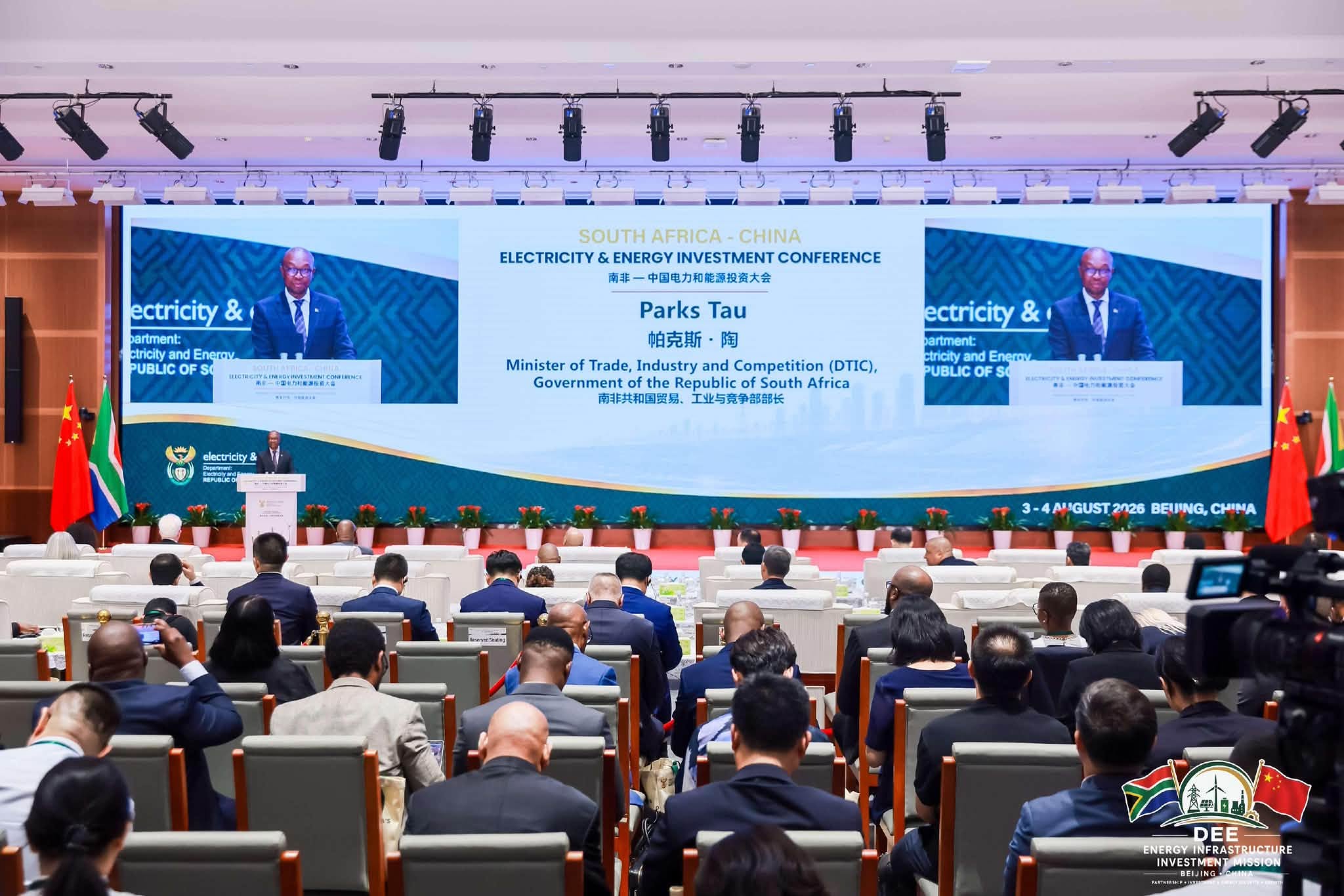
South Africa’s Department of Electricity and Energy and the South African Embassy in China, with support from Chinese state contractor POWERCHINA, hosted a two-day investment conference at POWERCHINA’s Beijing headquarters starting August 3. Over 260 government, finance, and industry representatives attended to discuss more than R2.2 trillion in investment opportunities over 2039, under South Africa’s Integrated Resource Plan 2025, which covers generation, transmission, storage, and manufacturing.
The numbers behind that plan are the real headline. South Africa wants roughly 105 GW of new generation capacity by 2039, built from a mix of solar, wind, battery storage, gas, and nuclear. On top of that, the country needs about 14,500 kilometres of new transmission lines, at an estimated R440 billion for the transmission component alone over the next decade.
South Africa’s energy minister, Dr Kgosientsho Ramokgopa, called this a decisive decade for the country’s energy transformation, framing the IRP 2025 pipeline as something that goes beyond capacity infrastructure, industrial development, and shared prosperity. POWERCHINA’s president, Wang Xiaojun, pointed to the company’s history in South Africa since 2008 and said POWERCHINA is ready to move projects from planning into implementation, alongside local procurement and skills development.
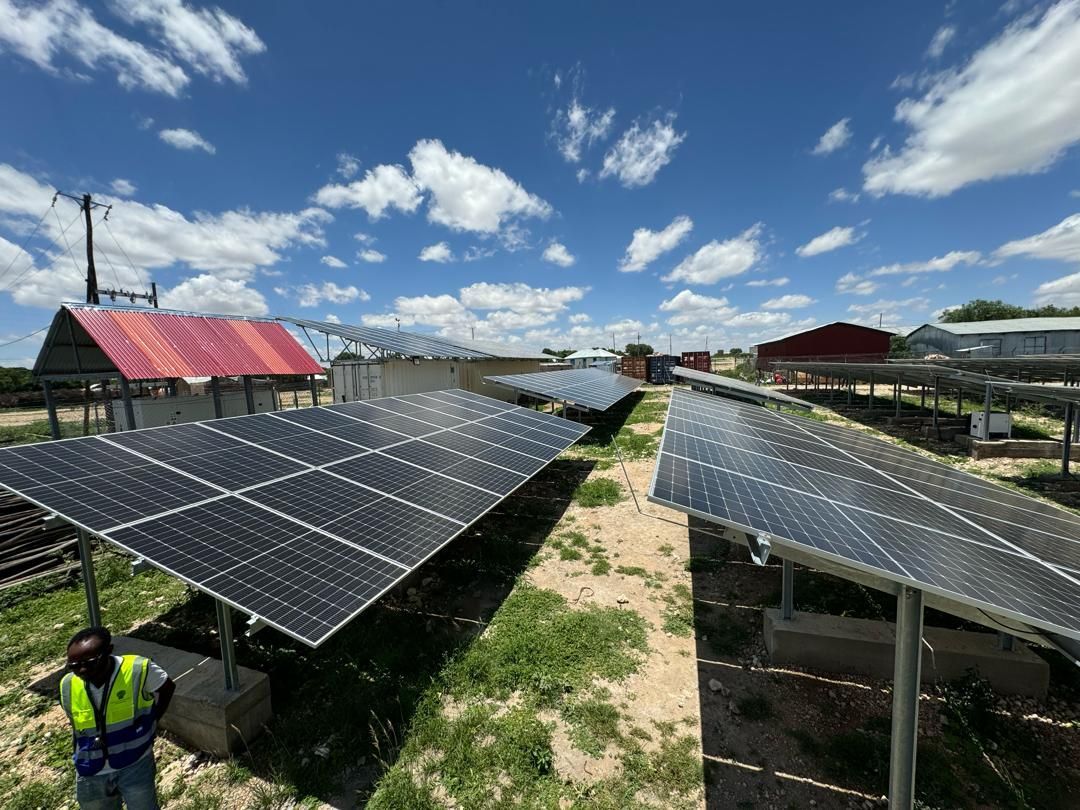
POWERCHINA’s actual track record in South Africa is somewhat impressive. This isn’t POWERCHINA showing up cold. The company’s completed and ongoing wind, solar, and concentrated solar projects in South Africa already total 1.9 GW combined capacity, with 1.9 GWh of battery storage projects under construction.
The flagship is the 100 MW Redstone concentrated solar power project, South Africa’s largest tower-based molten salt solar thermal facility, pairing solar generation with thermal storage for dispatchable renewable power. There’s also the Oya hybrid facility, combining wind, solar, and battery storage on one grid-connected platform.
Beyond power generation, POWERCHINA is behind the Mokolo-Crocodile Water Augmentation Project Phase 2A, expected to deliver 75 million cubic meters of water annually to secure supply for the Medupi and Matimba power stations and support the Waterberg mining area. Water and power are more connected than people realise; coal plants especially need serious water volumes to run, so this isn’t a side project- it’s load-bearing infrastructure for the grid itself.
POWERCHINA says its South African projects have created thousands of local jobs, and at Redstone it set up a welding training centre in partnership with a local university tied to concentrated solar power education.
Why this matters beyond the numbers is that South Africa’s power crisis has been a slow-burning national embarrassment for over a decade; load shedding became a household term, not a footnote. This conference is South Africa going straight to one of the few players with the balance sheet and construction capacity to move fast at this scale.
But there’s a bigger continental read here too. China’s infrastructure footprint in Africa isn’t new: ports, railways, telecoms, but energy is where the stakes are highest, because power generation and transmission capacity is the one bottleneck that limits everything else: manufacturing growth, data centre buildout, mining expansion, industrialisation broadly. Get the grid right, and you unlock everything downstream. Get it wrong, and every other ambition, including South Africa’s own AI and digital economy goals, stays capped.
Watch what happens here, because other African nations wrestling with generation gaps- Nigeria, Zambia, Ghana are taking notes on how this partnership model plays out. Read this for what it is: a press release from POWERCHINA, distributed by POWERCHINA, quoting POWERCHINA’s own president. Every positive data point in this story job numbers, GW figures, “lasting value” language comes from the company that stands to win contracts from the very pipeline being discussed. That doesn’t make the numbers false. It means none of them is independently verified here.
There’s also no mention of financing structure. Who’s actually funding R2.2 trillion: South African state balance sheets, Chinese state-backed loans, private capital, a blend? Debt-financed infrastructure deals with Chinese state contractors have drawn real scrutiny elsewhere on the continent over repayment terms and asset-backed loan structures. This announcement is silent on financing mechanics entirely, and that’s the detail that actually determines whether this partnership benefits South Africa long-term or just moves the country’s dependency from Eskom’s coal fleet to Chinese-financed renewables.
And “conference is expected to lay groundwork for a proposed partnership” is diplomatic language for: nothing is signed yet. South Africa will move forward with Chinese capital and construction capacity because, frankly, it doesn’t have a faster alternative at this scale. Western financing for African energy infrastructure has been slow and conditional for years, and POWERCHINA has fifteen years of delivered megawatts in-country to show for itself. But the real story here isn’t the R2.2 trillion pipeline. It’s whether South Africa negotiates financing terms that build sovereign energy capacity, or terms that quietly trade Eskom’s coal dependency for a different kind of dependency. That detail won’t show up in a press release. It’ll show up in the fine print of whatever gets signed next.