























There’s a question that should keep every African tech founder up at night: what happens when the record of your life’s work depends entirely on whether the institution you challenged happens to fund the platform documenting you? That’s not a hypothetical. It’s the exact fight playing out right now between a prominent African internet governance figure and the organisation that runs the internet’s naming system.
Every remote site I ever ran had one non-negotiable rule: the logbook does not get edited after the fact. Not by me, not by the client, not by anyone trying to make an incident look better than it was. The moment you let someone quietly revise the record of what happened, you’ve destroyed the only thing that makes a logbook worth keeping: trust that it reflects reality, not whoever had access to the pen last. That principle scales up a lot further than a shift log. It scales all the way to how the internet itself remembers its own history.
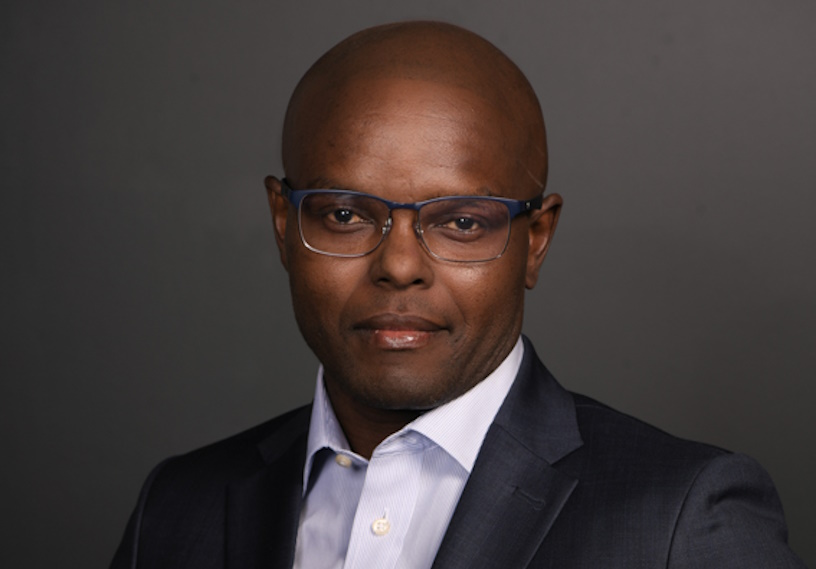
Sophia Bekele, founder of DotConnectAfrica Group and a key figure in the decade-long fight over the .africa domain, has published a detailed piece on CircleID alleging that ICANN Wiki quietly gutted her biography and her organisation’s page in July 2026. According to her account, the ICANN Wiki biographies for Bekele and DotConnectAfrica Trust were reduced by roughly 90%, dropping from 11 sections and 153 citations down to 4 sections and a fraction of the original references.
Her core claim is that this happened within days of four articles she published revisiting the .africa dispute, the long-running fight over which entity should manage Africa’s continental domain, which Bekele’s organisation ultimately lost to ZACR, the South African registry operator.
She points to specific language changes as evidence of intent rather than routine editing, describing her as an “unsuccessful applicant” who “failed the extended evaluation,” and says a section containing formal testimonials from the IDN Pioneers group was deleted, then restored, then reduced to a single line about “public praise.”
The part that should matter to anyone working in tech or media on this continent: Bekele states ICANN Wiki has received documented funding from ICANN exceeding US$100,000, meaning the platform positioned as a neutral historical record of internet governance is, by her account, financially tied to the very institution whose conduct it’s supposed to document objectively.
I want to be clear about something here: this is Bekele’s account, published as opinion and analysis on CircleID, not an independently adjudicated finding. ICANN Wiki’s editors have not published a public response as of this writing. I’m reporting what’s alleged and why the underlying governance question matters, not asserting that every characterisation is proven fact.
Why I actually care about this: Set aside who’s right in the .africa dispute itself; that’s a fight with a decade of tribunals, an Independent Review Process ruling, and litigation behind it, and I’m not going to relitigate it here.
What matters more broadly is the mechanism. We are entering a period where AI systems increasingly build their understanding of people, companies, and institutions by scraping exactly these kinds of “wiki” pages, treating them as ground truth because they look neutral, look sourced, look like Wikipedia. If a page can be quietly edited by a party with a financial interest in how the story gets told, and there’s no independently verifiable audit trail, then AI models trained or grounded on that content inherit the bias without knowing it’s there.
Bekele makes a sharp distinction worth repeating in your own words: editing improves accuracy, revisionism changes perception while hiding that the change happened at all. That’s the line every platform claiming to be a “record of history” needs to hold itself to, and increasingly, most don’t have to, because nobody’s watching closely enough to check.
This connects directly to something I keep hammering in this series: African institutions, founders, and organisations building anything of consequence a domain registry, a fintech, a mini-grid programme, a data centre need to control their own documented history, not rent it from platforms owned or funded by parties with an interest in the story.
Bekele’s own conclusion is the practical takeaway: an AI system assessing her body of work reportedly drew on LinkedIn, CircleID, and her own published archive, not the ICANN Wiki page at all. The lesson isn’t “wikis are evil.” The lesson is that no single third-party platform, however official-looking, should be your only record. If you’re building something in African tech, energy, or governance worth remembering, you’d better be archiving it yourself: Wayback Machine snapshots, your own site, your own published record, because you cannot outsource your own history to an institution that has an incentive to edit it.
I’ll say this plainly: this piece is written entirely from one side of a bitter, decade-old institutional fight, and it reads that way: strong language, a direct callout of an ICANN Wiki staffer by title, a closing quote from Miriam Makeba framing this as a colonial-echo battle over who controls the narrative. That framing is powerful, but it’s also advocacy, not neutral reporting, and I’d want to see ICANN Wiki’s side, and ideally an independent comparison of the Wayback Machine snapshots, before treating every characterisation as settled.
That said, the underlying governance question stands on its own merits regardless of who’s right in the .africa case specifically: funded-platform-documents-its-funder is a structural conflict of interest, full stop, and it deserves scrutiny whether or not you take Bekele’s side in the broader dispute.
AI-era governance is going to need something like a “chain of custody” standard for institutional records, the digital equivalent of my old rig-site logbook rule: no silent edits, full audit trail, or the record doesn’t count as authoritative. I’d bet within the next two to three years we see the first real push for exactly that kind of standard applied to wiki-style platforms that AI models lean on for grounding. Until then, if you’re building anything significant in African tech, don’t wait for someone else to protect your record. Archive it yourself, today, before you ever need to prove what actually happened.