

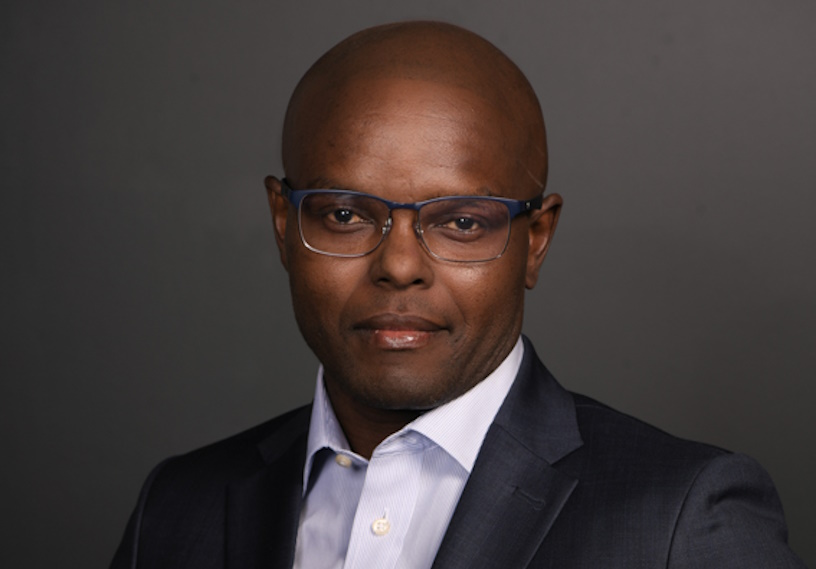

























Kunal Shah, the Indian entrepreneur who built CRED into one of the country’s most important fintech platforms, has stepped down as CEO of the company he founded to become the new global head of WhatsApp. He succeeds Will Cathcart, who led WhatsApp for more than seven years before moving to a new role within Meta.
The appointment landed alongside a separate but clearly connected move: Meta led a roughly $900 million funding round into CRED, valuing the company at more than $4 billion and giving Meta a minority stake in Shah’s former startup. Before CRED, Shah had already built and sold FreeCharge, a recharge and payments platform, in a deal reportedly worth around $400 million.
Shah isn’t stepping into an easy job. WhatsApp has more than 500 million users in India alone, but its payments arm has struggled. WhatsApp Pay reportedly holds well under 1% of India’s UPI transaction volume, while PhonePe and Google Pay dominate the space. That gap is almost certainly why Meta wanted a payments-native founder in the seat, not just a talented executive.
Now you may be wondering why it matters. Well, this isn’t just a personnel change. It’s a signal of how the world’s largest tech platforms are now hunting for founders, not career executives, to solve problems that require builder instincts rather than operational polish. Meta didn’t hire a WhatsApp lifter or a management consultant. It went and got someone who had already built two payments-adjacent companies from zero, one of which competes in the exact market WhatsApp is trying to crack.
It also reflects something bigger: global capital and global leadership roles are increasingly flowing toward operators who’ve proven they can build in complex, high-friction markets. India’s fintech landscape, with heavy regulation, thin margins, and intense competition, is not a gentle training ground. Shah earned this seat by surviving it.
After reflecting on this, this is what I think African business Leaders and Professionals Should Take From this
Build inside constraints, not around them.
Shah didn’t build CRED in Silicon Valley with easy capital and light regulation. He built it in one of the world’s toughest fintech environments, and that’s exactly what made him valuable to Meta. African founders and operators building solar companies, fintech platforms, logistics networks, or security systems under unreliable power, patchy infrastructure, and thin capital markets are quietly developing the same asset: proof that you can execute where it’s hard. That track record travels. Don’t undersell it as “just surviving”; it’s a credential.
Depth in one domain beats breadth across many.
Shah didn’t diversify into ten unrelated ventures. He went deep, recharge, then credit and payments, twice and became the person a company like Meta thinks of first when payments-in-messaging becomes the problem to solve. African professionals chasing every emerging trend (crypto this month, AI agents next month) might learn from this instead: pick a lane tied to a real, durable problem, energy access, digital identity, agri-logistics, security infrastructure and go deep enough that you become the obvious name when a bigger player needs that specific expertise.
The exit isn’t always a payout; sometimes it’s a bigger platform.
Shah didn’t sell CRED and disappear. He moved from running a $4 billion company to running WhatsApp’s global operations, likely retaining influence over CRED as an investor and board-level figure. For African entrepreneurs building ELTOMS-style internal systems, solar ventures, or media platforms, the lesson isn’t “build to flip.” It’s build something valuable enough that leaving it well-positioned becomes a promotion, not an abandonment.
Capital follows credibility, not just growth charts.
The $900 million Meta poured into CRED alongside Shah’s appointment wasn’t a blind bet on a spreadsheet. It was a bet on a founder who had already proven he could operate at scale under pressure. African leaders courting investment, whether from local banks, diaspora capital, or international funds, should note that credibility built through consistent execution often unlocks capital faster than a polished pitch deck alone.
Regional dominance is a legitimate stepping stone to global relevance.
Shah didn’t need a Silicon Valley pedigree. He built dominance in India’s domestic market first. That regional proof point was enough to get him a global mandate. African founders don’t need to skip the step of winning their home markets, Lagos, Nairobi, Buea, Accra, Kigali, before thinking globally. Regional depth is not a limitation; it’s the foundation that global players eventually notice.
The Shah-WhatsApp story is a reminder that the next generation of global tech leadership won’t only come from traditional Western tech hubs. It will come from operators who have proved themselves in demanding, resource-constrained markets, which is precisely the environment in which much of Africa’s tech and energy sectors operate every day. The opportunity isn’t to copy Shah’s path. It’s to recognise that the same instincts building under constraint, going deep in one domain, and earning credibility through execution are already being tested, right now, across Africa’s growing tech ecosystem.
Last but not least, having employees who think like entrepreneurs is no longer a threat as years before; Nowadays they are largely assets for a company. The best management can do is to nurture them and give them opportunities to develop certain aspects of your company. You can be surprised at the transformation; their initiatives or startup ventures can also be incorporated into the business as a subdivision, thus creating further expansion for the entire organisation. This is what global businesses are doing now. This also comes as a reminder to be humble, patient, diligent, and intentional about your work. As a leader, learning how to manage people irrespective of their background and adapting to the work environment is essential. I do not doubt that in the coming days, there’ll be more features popping up on WhatsApp, perhaps ”WhatsApp Pay”