






















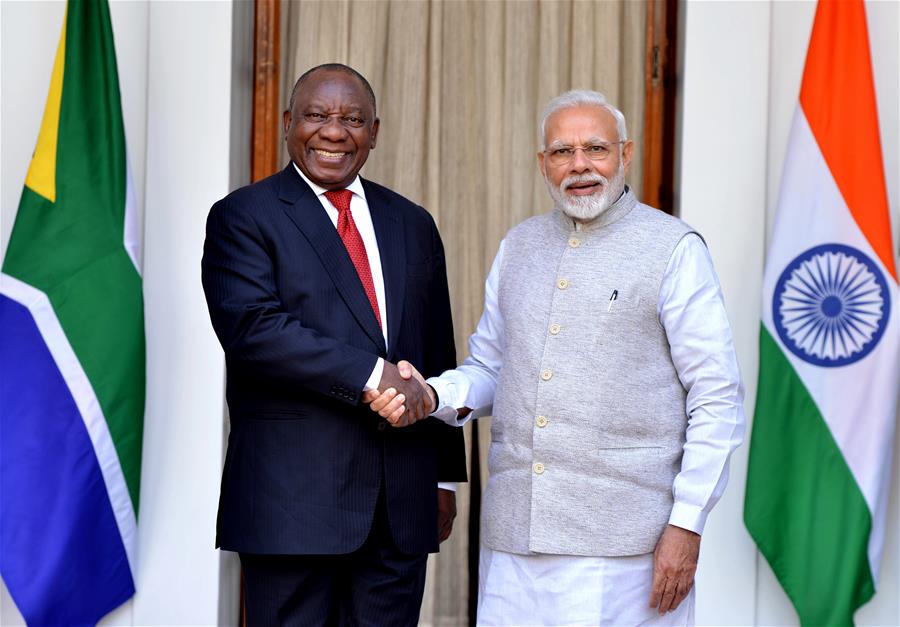
Diplomats and policy experts gathered in New Delhi this week with a message for Africa and India: the global order is shifting, the old boys’ club at the top is getting crowded, and if these two regions don’t lock in a serious partnership around solar energy, critical minerals, space technology, and skills, someone else will fill that gap. that someone already has a head start, speaks Mandarin, and has been building roads across the continent since before some of our ministers finished secondary school. The question is not whether Africa should cooperate with India. The question is whether Africa will finally show up to these partnerships as a serious player, or arrive again as the pretty girl at the party that everyone dances with but nobody takes home to meet their parents. haha
To be honest, I have sat in enough vendor meetings across Oil & Gas and Energy companies to know what it looks like when someone comes to the table with something to sell versus someone who comes with something to build together, like the case of most young entrepreneurs, often they don’t have money to start, so they trade potential. In a nutshell, the body language is just different. The conversation is different. The contracts that come out of it are very, very different.
When India and Africa sit down to talk partnerships, I wanted to know: which kind of meeting is this? because, according to experts speaking at a New Delhi discussion on India-Africa relations this week, the answer could define the next 30 years of this continent’s trajectory. And I am not being dramatic. I am being precise.
In my view, the World is being reorganised, and Africa will always have a Seat, that’s if it wants one. A former Indian ambassador speaking at the event said the international system is undergoing profound change, with Africa set to emerge as a key pillar in an emerging multipolar world alongside India and other major powers, according to The Statesman. Now that sounds like diplomatic fluff. Let me translate it into plain language. The US-China rivalry is reshaping every supply chain on the planet. The Hormuz crisis earlier this year showed what happens when Gulf energy routes are disrupted. Europe is scrambling for mineral supply chains that don’t run through China. Everybody, and I mean everybody, is suddenly very interested in what is sitting under African soil. Cobalt. Lithium. Manganese. Graphite. The raw materials that go into every solar panel, every EV battery, every gigawatt of renewable energy infrastructure being built anywhere in the world.
Africa holds an estimated 30% of the world’s critical mineral reserves. That is not a footnote. That is a negotiating position. A serious one. Experts at the discussion identified critical minerals as a strategic area where India and African countries could deepen ties, with speakers saying partnerships should prioritise local processing and value addition instead of simply exporting raw materials.
Did you catch that? Local processing. Value addition. Not an issue of “ship us your rocks, and we’ll build things with them.” That is actually a meaningful ask because historically, Africa has been very good at exporting raw materials and very bad at capturing the value that those materials generate downstream. We have been the mine. Rarely the factory. If India is genuinely proposing to build processing partnerships on African soil, that changes the conversation entirely. If it is just diplomatic language that results in more raw cobalt leaving Kinshasa, for example, on a boat, we have seen that movie before. Different flag on the boat, same storyline.
The Scramble for Africa season two has Solar as the One Everyone’s Fighting Over. I spent years working as a Digital Transformation Specialist and IT Infrastructure lead in energy companies. One thing I can tell you from that experience is this: the infrastructure decisions you make in year one determine what you are stuck with in year fifteen. Path dependency is real. You build your network around a vendor, and that vendor owns you for the next decade. Africa is at that inflexion point right now with energy infrastructure. The choices being made today, solar or diesel, grid or decentralised, Chinese panels or Indian panels or domestic manufacturing, will determine who controls the continent’s energy stack for the next generation.
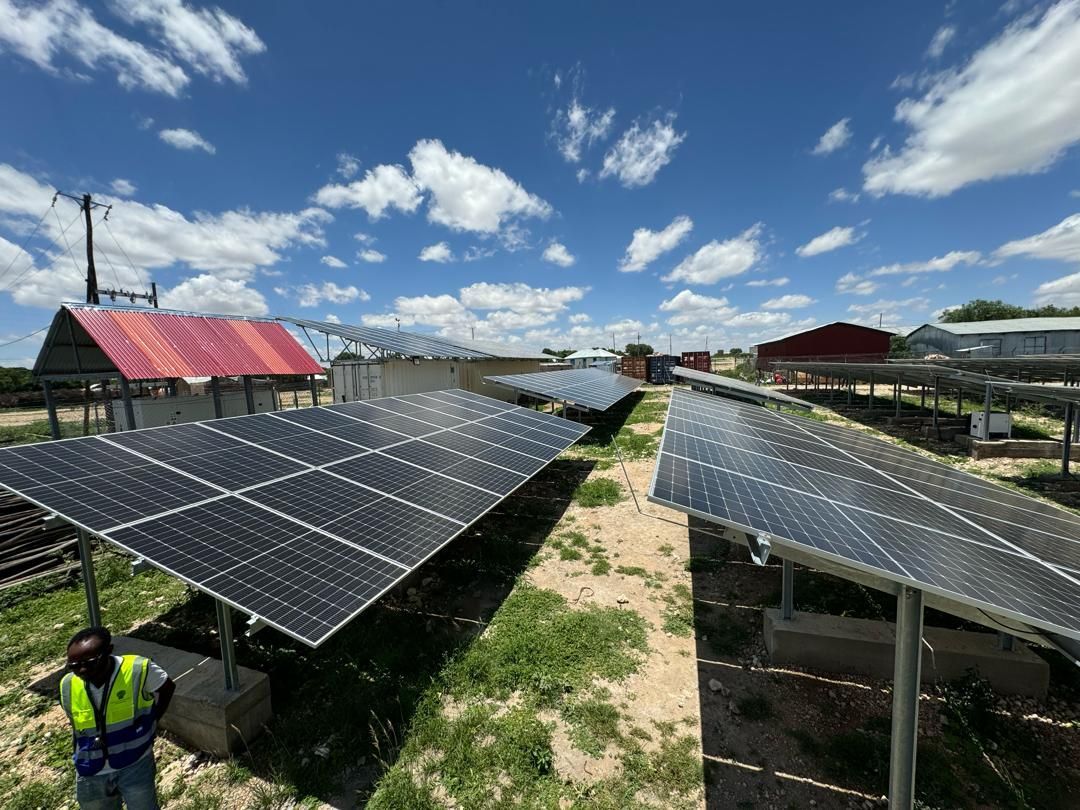
The International Solar Alliance was highlighted as a key platform for India-Africa collaboration in renewable energy, with Indian companies already setting up solar equipment and pump assembly units in several African countries, while cooperation is also expanding in hydropower projects, according to The Statesman. Assembly units in African countries. That is slightly better than pure imports. I want to see manufacturing. I want to see technology transfer. I want to see the moment when an engineer in Ghana or Cameroon is not just assembling a solar panel designed in Gujarat but is actually designing the next iteration of it. That is the partnership worth having.
ISRO is doing something really interesting worth paying attention to. This part surprised me, and I don’t get surprised easily.
The panel pointed to growing cooperation in space technology through India’s space research organisation, which is working with African countries including Egypt, South Africa, Ghana and Nigeria. Ghana and Nigeria are in active space technology cooperation with ISRO. Let that land for a second.
I have deployed network infrastructure in locations where the main connectivity challenge was getting a reliable VSAT signal. I have watched oil and gas operations in remote areas depend entirely on satellite communications that cost a fortune and delivered bandwidth that would embarrass a 2005 DSL connection. Space technology for Africa is not an exotic luxury; it is critical infrastructure for precision agriculture, remote sensing, disaster response, weather forecasting, and national security. If African countries are building space technology capability with India’s help, that is a legitimate strategic win. Not a photo opportunity. An actual capability investment.
As China’s presence on the African continent now extends well beyond infrastructure projects, mining investments, and trade agreements, its influence is increasingly exercised through diplomatic pressure, political signalling, and the power to shape the decisions and actions of governments. One expert at the discussion pushed back on framing this purely as competition, suggesting that cooperation with China alongside India is possible, too. And in theory, he is right. In practice, anyone who has watched procurement decisions in African government agencies knows that Chinese financing packages come bundled with conditions, preferences, and long-term obligations that are very hard to walk back from.
I am not anti-China. I am pro-Africa having options. Real options. The more serious partnerships Africa builds with India, the US, the EU, and others, the more leverage Africa has when any single party tries to get too comfortable. Furthermore, capacity building was described as one of India’s strongest contributions to Africa, with thousands of students and professionals trained under the Indian Technical and Economic Cooperation programme. However, speakers said academic and think tank exchanges remain limited and called for stronger institutional partnerships. Thousands trained. Institutional partnerships still weak. That gap right there is the summary of Africa’s challenge with every partnership it enters. The training happens. The individuals come back home with new skills. Then they walk into systems that are not designed to use those skills, managed by leadership that did not get the same training, funded by budgets that do not reflect the same priorities.
You cannot skill your way to development if the institutional infrastructure that receives those skills is broken. India can train a thousand African renewable energy engineers. If those engineers come back to ministries still approving diesel generator contracts because someone’s cousin has the distribution deal, those engineers are going to leave for Canada, most likely. The partnership Africa needs with India is not just technical. It is governance, procurement reform, and the political will to use what you have built. That part, unfortunately, no external partner can provide. That one is on us.