



























Malawi has cut pediatric mortality in some hospitals by 40-51% simply by giving nurses an AI system that predicts when a child’s condition is about to deteriorate up to three hours before it becomes critical. The system, called IMPALA, is now running in over 20 hospitals across Malawi and has expanded to Rwanda, Kenya, and Tanzania, doing the job that a severe shortage of paediatricians (Malawi has roughly 1 doctor for every 50,000 child patients) simply can’t do fast enough on its own
A significant part of my job was sitting in front of a network monitoring dashboard where dozens of Fuel dispenser controllers, links, and nodes were being watched at once, like the time I was working for TSG Cameroon. The whole job wasn’t about being smart enough to catch every problem manually; it was impossible to watch everything at once. It was about setting the right alert thresholds so the system told you the moment something was drifting toward failure, before it became an outage. That’s the entire philosophy behind good infrastructure monitoring: you don’t need more eyes, you need earlier warnings. So when I read that Malawi just used that exact logic to cut child deaths in half, it just took me aback.
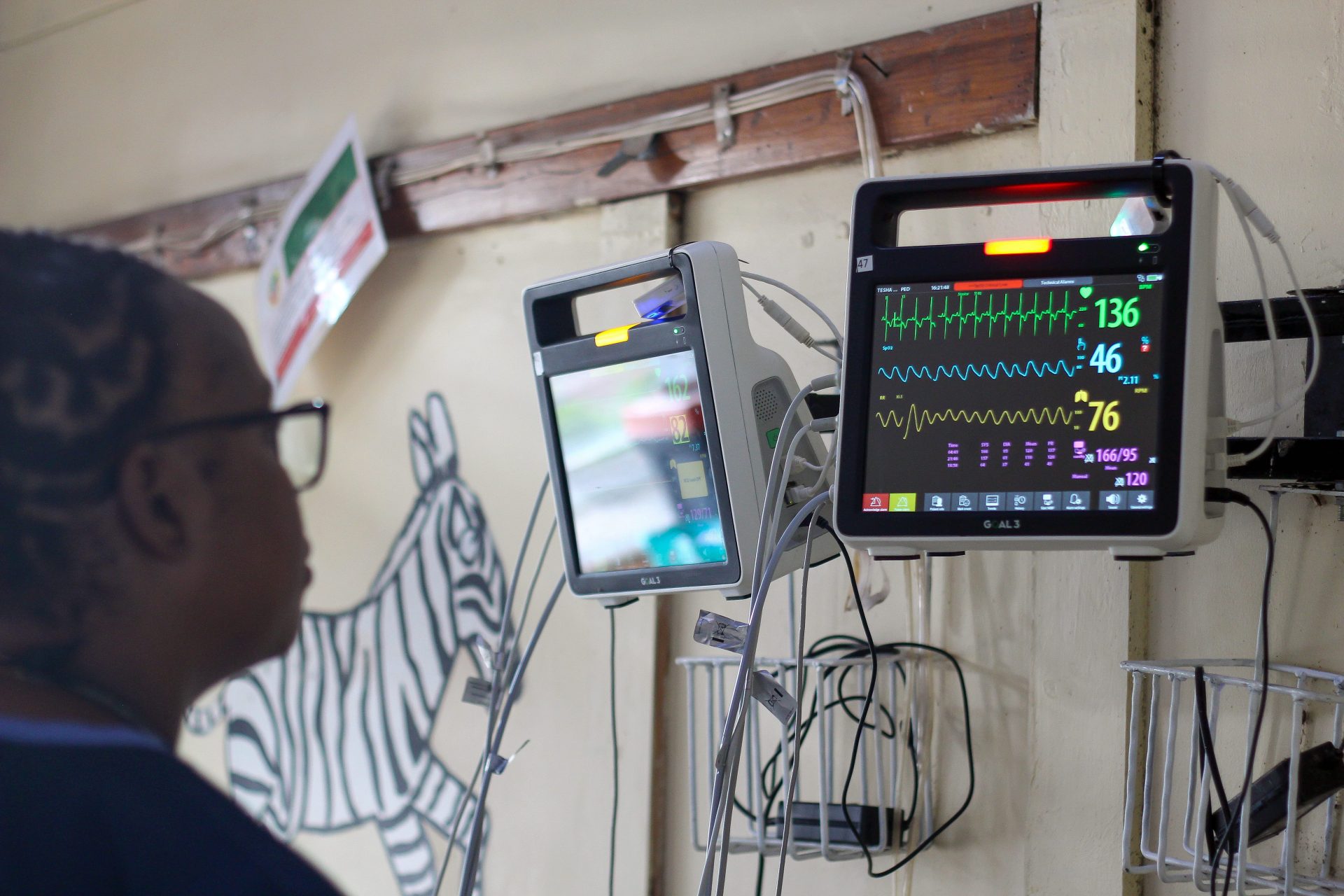
The headline is Malawi has rolled out IMPALA, an Innovative Monitoring system in Paediatrics, functional in Low-resource Settings. It’s an AI-powered patient monitoring system built by Dutch health-tech company GOAL 3. It’s now deployed at Mangochi District Hospital, Malamulo Hospital, Queen Elizabeth Central Hospital, and others. The system continuously tracks a child’s vital signs through bedside monitors, processes the data locally, and pushes it to a tablet app that a single nurse can use to watch up to 30 patients at once. When a child’s readings start drifting toward danger, the system fires a visual and audible alert, often up to three hours before a crisis would otherwise hit. I think a similar innovation was done by a Cameroonian in 2024, but that was more focused on cardiac.
Between the 2022/2023 and 2023/2024 periods, two of the hospitals running IMPALA recorded 40-51% fewer pediatric deaths. Blessings Juma, head of the pediatric ward at Mangochi District Hospital, put it plainly: they used to see four child deaths in a week to two weeks; now it’s down to about one in the same window. Dr Jessica Chikwana at Zomba Central Hospital described mornings that used to start with handover notes reading “baby found dead, rest in peace” and said she doesn’t see that anymore.
This is where my background actually helps explain what’s happening better than a straight health story would. IMPALA isn’t diagnosing anything. It’s not smarter than a doctor. What it’s doing is exactly what a good monitoring system does on any critical network: it removes the requirement for a human to be staring at every single node all the time. Before IMPALA, a nurse checking vitals meant physically walking to each child’s bedside repeatedly. Now, one nurse with a tablet does the equivalent of watching a NOC dashboard; she only moves when something alerts. Gift Mhango, a pediatric nurse in Kapiri, described it exactly this way: she can care for one child while keeping an eye on the tablet, and only responds when something’s actually going wrong.
I’ll say the quiet part: a monitoring system is only as good as the response capacity behind the alert. IMPALA can tell you a child is deteriorating three hours early, but if the hospital still doesn’t have enough hands, drugs, or beds when that alert fires, you’ve just given people advance notice of a problem they still can’t fully fix. Malawi has fewer than 40 practising paediatricians in the entire country. IMPALA is filling a monitoring gap brilliantly, but it doesn’t manufacture doctors. The real headline here isn’t “AI saves babies”, it’s “AI buys understaffed hospitals the one resource they never have: time.” That’s valuable, but it’s not the whole fix
However, this still matters for Africa, because IMPALA has already expanded to Rwanda, Kenya, and Tanzania, and this is exactly the kind of AI deployment African healthcare systems should be chasing hard: not flashy diagnostic AI trying to replace doctors, but quiet, cheap, monitoring-layer AI that multiplies the impact of the few skilled staff who already exist. It reportedly costs 16% less than standard monitoring devices, too, which matters enormously in health systems from Lagos to Lilongwe, where budget, not ambition, is usually the ceiling. Nigeria, Ghana, and Cameroon all face the same paediatrician shortages Malawi does, too. This is a template, not a Malawi-only story after all, a win for one is a win for all
This is proof that the most valuable AI in Africa right now isn’t the kind that impresses conference audiences, it’s the boring, unglamorous monitoring layer that catches what exhausted, understaffed humans physically cannot watch 24/7. If African health ministries chase more of this and less flashy diagnostic-AI hype, we’ll save more children in the next five years than a decade of AI pilot programs that never left any African country’s capital boardrooms