











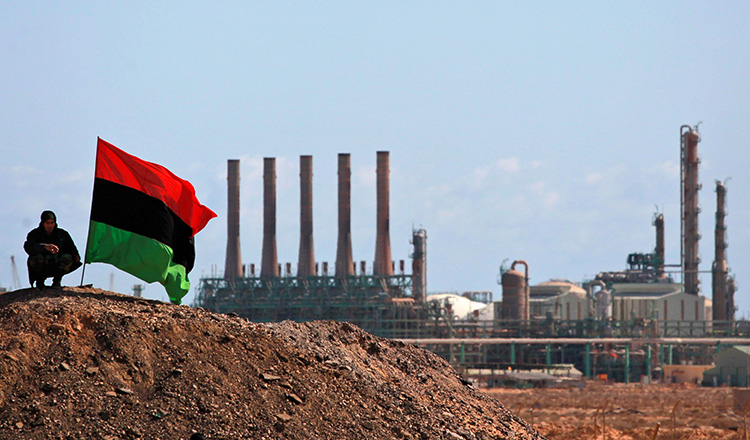
Libya’s National Oil Corporation just announced three fresh oil and gas finds one offshore with Italy’s Eni in Block D, one onshore in the Murzuq Basin with Spain’s Repsol, and one in the Ghadames Basin near the Wafa field with Algeria’s Sonatrach all coming out of 2008-era Exploration and Production Sharing Agreements, and all signaling that Libya’s oil sector is clawing its way back from over a decade of conflict-driven chaos.
There was a time I spent four days trying to get a VSAT link stable at a remote flow station because the contractor who installed it in 2011 didn’t document the azimuth settings properly. Four days, chasing a ghost from over a decade earlier, just to get telemetry flowing again. So when I read that Libya’s latest gas well is “the final one in fulfilling nine contractual obligations” from an agreement signed in 2008, I laughed out loud. Eighteen years. Somebody at NOC has been quietly closing out a punch list since before some of my juniors were born, and nobody’s throwing them a parade for it
The three finds include, first site, Eni, offshore, Block D. About 95 km off the Libyan coast, drilled past 10,000 feet, the Metlawi reservoir flowed gas at 14 million cubic feet a day on one choke setting and 24 million cubic feet a day on another. That’s a well that clearly wanted to produce; it wasn’t a struggle to get flow, which, in exploration terms, is the difference between a well you celebrate and one you quietly plug and forget.
Second site Repsol, onshore, Murzuq Basin. About 800 km from Tripoli, already producing 763 barrels of oil a day. Modest by Gulf-of-Guinea standards, but it’s the fifth of eight commitments Repsol owes under its own EPSA, another long game being played out in the desert.
Third site, Sonatrach, Ghadames Basin, near Wafa. This one’s the interesting hybrid delivering both gas (13 million cubic feet a day) and condensate (327 barrels a day) from two formations at once. Sixth of eight planned wells. Algeria’s state oil company clearly isn’t rushing either.
This isn’t just a Libya story, and here’s why. This is bigger than three well reports buried in an NOC press release. It’s proof that patient capital still works in African upstream oil and gas, even in a country that’s spent years as a byword for instability.
Libya sits on Africa’s largest proven oil reserves, and yet production has been a rollercoaster since 2011 blockades, rival governments, militia disruptions, the whole mess. What this announcement shows is that international partners never actually walked away. Eni, Repsol, and Sonatrach kept their contractual obligations alive through years nobody would have blamed them for quitting.
For Algeria, Sonatrach’s continued exploration commitment in Ghadames matters. Algeria’s own gas exports to Europe via pipelines through Tunisia have been under pressure as EU buyers diversify supply post-Ukraine war, so cross-border basin experience and continued regional hydrocarbon activity keep Sonatrach’s technical muscle sharp at home too. For Nigeria and Angola, Africa’s traditional oil heavyweights, this is a quiet warning. Both countries have been losing international operators to divestment (Shell, Eni, and ExxonMobil have all trimmed onshore Nigerian assets in recent years over security and pipeline vandalism costs). Libya just showed that if the fiscal terms and geology are good enough, majors will stay through actual civil conflict. That’s a governance and contract-stability lesson Abuja and Luanda should be studying, not shrugging off.
I’ll be honest here, “renewed momentum” is doing a lot of heavy lifting in how this story is being framed. Three wells finishing out commitments signed in 2008 are not the same as Libya’s oil sector being “back.” NOC still operates in a country with two rival governments and a fractured central bank. You don’t build sustainable production growth on press releases about flow tests; you build it on pipeline security, stable export terminals, and one government that international banks will actually wire money to. Until that political plumbing gets fixed, every barrel from Murzuq and Ghadames is still hostage to the next round of internal Libyan politics.
Libya’s oil comeback narrative is premature, but Africa’s upstream investment resilience narrative is very real, and it’s the second one that matters more. My prediction: within the next 18 months, at least one of Nigeria’s or Angola’s fiscal regimes gets quietly rewritten to compete with the kind of long-horizon patience international majors just showed Libya, because Abuja and Luanda cannot afford another round of watching operators sit tight somewhere riskier than they are.