



























Let’s begin with an aside; you noticed your community doesn’t have provision stores, and there are a lot of inconveniences you’ve noticed because perhaps people have to cross seas to buy provisions. So you then decided to start one within the community, and to your greatest dismay, no one’s coming to buy. No one’s even promising to buy. The French African people will term it sorcelerie. Back to our story, Africa’s bid to build its own vaccine industry is about to face its biggest test just as Western health funding retreats. Gavi is preparing to make its first cash disbursements from its $1.2 billion African Vaccine Manufacturing Accelerator programme in the second half of 2026, marking the moment the continent’s vaccine ambitions move from construction blueprints into actual commercialisation.
That sounds like progress. And it is on paper. But anyone who has ever commissioned a new IT system knows the uncomfortable truth that the hardware arriving on site is the easy part. Getting it to actually work, getting users to trust it, getting procurement to buy from it, and keeping the whole thing running when the implementation consultant has long gone home, that is where projects go to die. Africa’s vaccine manufacturing story is at exactly that inflexion point. The factory is almost ready. Nobody has confirmed who is going to consistently buy what it produces.
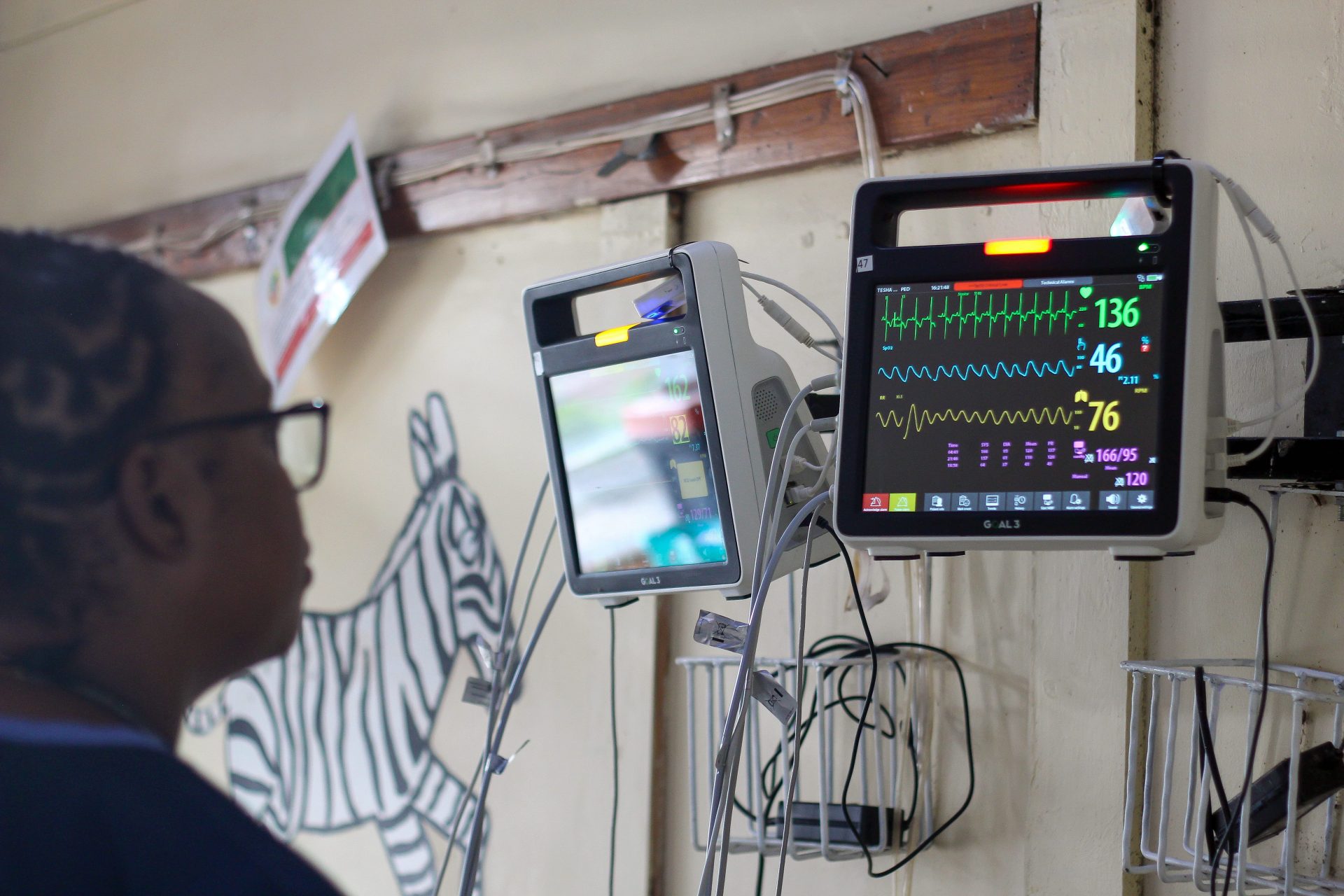
Early in my IT career, I was part of the team that deployed a brand new server infrastructure for a mid-sized company. The hardware was a beautiful rack-mounted, properly cabled, UPS-backed-up, redundant everything. The MD came for the commissioning ceremony, shook everyone’s hand, and took photographs next to the server rack like it was a newborn baby.
Six months later, half the services we deployed were barely used. Not because the servers were bad. Just that Nobody had thought seriously about user adoption, internal procurement integration, or long-term support contracts before the ribbon was cut.
That memory keeps coming back to me as I read about Africa’s vaccine manufacturing push. Because the continent is very close to having its ribbon-cutting moment, and I am not sure we have had the adoption conversation yet. The African Union and Africa CDC have set a target of producing 60% of the required vaccines locally by 2040, an ambition shaped sharply by the COVID-19 pandemic, when African countries struggled to access vaccines while richer nations locked up early supplies.
COVID was Africa’s brutal wake-up call. We watched the queue. We were at the back of it. Countries that manufacture vaccines got their populations covered first. Countries that only import vaccines got whatever was left, whenever it arrived, at whatever price the market decided to charge in a crisis. Gavi’s $1.2 billion African Vaccine Manufacturing Accelerator, a 10-year initiative to spur production through demand-linked incentives, is now preparing to make its first cash disbursements to an African manufacturer this year. Separately, South Africa’s Biovac has secured backing from the International Finance Corporation, the European Investment Bank, and the European Commission to support end-to-end vaccine manufacturing, which would make it Africa’s first fully integrated multi-vaccine manufacturing site.
These are not small things. Infrastructure is going up. Money is moving. The intent is real. But intent and implementation are two very different network layers. The Problem Nobody Wants to Lead With. Here is what the headline does not say, but the article eventually admits: success will depend less on constructing facilities than on securing long-term buyers, trusted regulators, technology transfer, and patient capital that can sustain long-term production. In plain English, it translates as we can build the factory. We still need to figure out who is going to consistently order from it, at what price, with what lead times, and under what regulatory framework.
In IT infrastructure, we call this the “build it, and they will come” problem. It is the number one cause of expensive projects that look great on paper and underperform in practice. You provision a data centre without locking in the tenants first, and you end up with a beautiful building full of empty racks. The Africa CDC is pushing African companies to move beyond fill-and-finish operations, where you essentially just package vaccines formulated elsewhere, and into actual drug substance manufacturing, through technology transfer agreements that enable local production of genuinely new products.
That is the right ambition. Fill-and-finish is the IT equivalent of rebranding someone else’s router with your logo and calling it local manufacturing. It is not wrong, but it is not sovereignty either. Real sovereignty is when you understand the formulation, you hold the intellectual property licence, you can modify the product, and you are not dependent on a foreign supplier sending you the active ingredient.
Dr Delese Mimi Darko, director general of the African Medicines Agency, made a point that should be framed and hung in every health ministry on the continent: “If your regulator is not strong, your product is a waste.” I have seen the equivalent of this in the technology sector so many times that it is almost funny. A company deploys a technically excellent cybersecurity tool, but the internal IT governance process for approving new software takes eight months, requires sign-off from four departments, and was last updated in 2019. So the tool sits in a procurement queue while the threats it was supposed to catch keep walking in through the front door.
A vaccine manufactured in Lagos or Accra still needs WHO prequalification or stringent regulatory authority approval before UNICEF or Gavi will buy it for global programmes. Without that regulatory credibility, your factory is producing vaccines that cannot reach the largest and most reliable procurement channels in the world. The science can be perfect. The documentation chain that proves the science can be broken and that breaks everything.
There’s a governance Problem That Keeps Repeating. Nigerian virologist Professor Oyewale Tomori raised something that deserves to be said loudly: a previous $7 million allocation for local vaccine production in Nigeria became more focused on disbursing money through contractors than building sustainable production capacity. “The ministry wanted, by all means, to get that money out,” he said. I have sat across from government IT procurement officers who were under instruction to spend the digital transformation budget before the fiscal year ended, regardless of whether the right vendor had been selected, the right architecture designed, or the right implementation partner contracted. Spend the money. File the report. Take the photo next to the server rack. That is not a transformation. That is budget clearance cosplaying as progress.
Some critics argue that Gavi’s AVMA programme is structured around the wrong market logic, entirely built around pull incentives tied to WHO prequalification and UNICEF tenders that risk favouring larger international producers with the capital to reach those milestones, while emerging African manufacturers still need earlier upstream support for R&D, clinical trials, and regulatory dossiers. In other words, the reward is at the finish line. But African manufacturers are still trying to find the starting blocks.
Nigeria’s Approach is actually quite interesting; They are trying something structurally smarter, developing three vaccine manufacturing projects as part of a wider push to build an end-to-end healthcare manufacturing sector, rather than treating vaccine production as a standalone factory project. The Presidential Initiative for Unlocking the Healthcare Value Chain is working simultaneously on workforce training, clinical trials, active pharmaceutical ingredient production, and pooled procurement systems.
That is systems thinking. That is the difference between installing one server and designing a network. You cannot fix one layer and leave the others broken; latency in any layer degrades the whole system. If you build the vaccine factory but have no trained quality assurance staff, no local API supply chain, and no pooled procurement mechanism to guarantee demand, you have not built a factory. You have built a monument.
The Bottom Line to me is that Africa does not have a vaccine manufacturing ambition problem. It has a follow-through architecture problem. The COVID pandemic proved that importing your healthcare security from countries that will prioritise their own citizens the moment things get serious is not a strategy. It is a gamble. And Africa lost that gamble publicly, in real time, in front of the whole world. With Western aid budgets now tightening, African health sector leaders have increasingly framed local manufacturing not just as industrial policy but as a survival strategy, a route to self-reliance that reduces dependence on donor-led emergency responses every time a crisis, such as the current Ebola outbreak, strikes.
The factories are coming. The money is moving. The intent is documented. What needs to come next is not another conference, not another framework document, and definitely not another photo next to a server rack. What needs to come next is a procurement commitment from African governments, to African manufacturers, for African populations that makes local vaccine production commercially viable before the next pandemic tests whether we learned anything from the last one. The ribbon-cutting is coming. The real work starts the morning after. Finally, my question is, don’t we trust what we produce?